How to resolve HMRC tax debts. Directors can struggle in difficult times, particularly for example as a consequence of unforeseen events like Covid-19.
This can manifest itself with having problems in paying your tax liabilities when they fall due. If you are finding that your company is having difficulty in keeping up with tax debts you may find this information of some use to you. Please feel free to contact us at your earliest convenience for an absolutely free confidential conversation on your situation.

HMRC is very experienced and organised with significant resources at its disposal to recover outstanding debts, so it is important to ensure that you engage with them and treat them with the respect that they deserve, as with any creditor. HMRC tax problems risk only get worse if you do not address them at the earliest possible stage and expeditiously. We can help you but can you write of HMRC tax debts? No, you cannot.
Everyone has to deal with HMRC; you will not be the exception to rule! Remember the proposition about life’s certainties ie. the only ones appear to be death and tax! HMRC is often a creditor of companies. It is an involuntary creditor. When companies begin to encounter financial difficulty, they are often in a position where they cannot pay HMRC, when tax becomes due for payment.
Liquidate A Company With HMRC Tax Debts

Applies to the liquidation of an insolvent company with HMRC tax debts*
*Terms of engagement and VAT apply.
ready to apply
Time to Pay Arrangement To Resolve HMRC Tax Debts
If your company is having problems meeting its tax bills, you may and stress may, be able to agree an arrangement with HMRC that enables you to pay your taxes that are due in installments over a longer period of time.
This is known as a Time to Pay (TTP) arrangement.
What is a Time to Pay Arrangement?
A Time to Pay arrangement is an agreement between HMRC and the taxpayer that tax can be paid over a period rather than in a lump sum.
All taxes can be subject to Time to Pay arrangements but it’s most often used for Corporation Tax, VAT and PAYE in relation to companies.
A Time to Pay arrangement is particularly suitable and useful to be deployed for companies that are having short term cash flow issues. If you are having ongoing HMRC tax problems then this may not be the best solution to solve the problem.
Can you Negotiate with HMRC? How to resolve HMRC Tax Debts?
Of course you can. Only two things that are certain in life, death and taxes. However, whilst you can always negotiate, that does not mean that you will reach the outcome that you might have hoped for. It is about managing your expectations and not setting unrealistic goals. The duty of the taxpayer is to pay taxes and transparency is key if you consider you have a case for forbearance. Forbearance is not forgiveness!
How to resolve HMRC Tax Debts? HMRC are not in the business of placing undue pressure on business people who have maintained clear communication and with a viable business which is simply going through a sticky patch.
In these circumstances, and where there are proper reasons, they are often open to negotiation. In the case of large sums, it may be worth letting us assist you to communicate and engage on your behalf with HMRC. We tend to understand their ways, their thought processes and their boundaries. Our experience could potentially be deployed to enable you to seek a reasonable deal.

When to Ask for a Time to Pay Arrangement. How to resolve HMRC Tax Debts?
When would be the best time to ask HMRC for a Time to Pay Arrangement? Well, remember the old adage prevention is better than cure? Conceivably the best time to approach HMRC if you are having difficulties paying your tax is before that tax bill has turned up in one of those brown envelopes or before the electronic payment deadline has arrived. If you are proactive and do not bury your head in the sand HMRC tend to respect that. Your credibility, integrity and consistency are of fundamental importance so that they can have trust in you and the process that you propose.
It is possible to agree Time to Pay arrangements once the debt is overdue but it is far better to take the proactive approach. HMRC are more likely to consider your approach if you contact them before the debt is overdue. This also has the benefits of conceivably avoiding the risk of penalties.
How Accessible is a Time to Pay Arrangement?
HMRC will usually only enable you to enter into a Time to Pay arrangement if a company is genuinely unable to pay its taxes when they fall due.
They will also look at the company’s payment and compliance history, the area of the economy that it operates and the likelihood of the ability to be able to pay future tax liabilities.
What the Time to Pay Arrangement Entails
Time to Pay agreements are usually dependent on the particular circumstances of the case but they have a certain consistency in how they are formulated and structured. Typically such agreements will cover the amount of tax to be paid, the period over which this tax is to be paid and such other features as dates with the amounts applicable to the payment plan.
Unsurprisingly perhaps HMRC prefers to have debts repaid quickly. Do you know anyone who doesn’t?! The majority of such agreements are for periods of less than a year. It is entirely possible to negotiate a longer time to pay arrangement but if this is something you are considering, you will likely need to have a compelling and fully evidenced case for them to agree to this.
VAT, PAYE, Corporation Tax
HMRC will consider payment plans on all of these taxes. However, in our experience, they are often notably concerned about unpaid taxes that you have been collecting for them, such as VAT and PAYE.
Terms and Conditions: How to resolve HMRC Tax Debts?
If HMRC do agree to a Time to Pay arrangement, you should be aware that it will have terms and conditions. If you were to breach these conditions HMRC can (and do reserve the right to) cancel the arrangement and or accelerate the payment of amounts still outstanding. If this demand is not satisfied, they can bring legal proceedings to recover the unpaid tax and charge penalties accordingly. Such terms are usually going to be focused on the payment terms by date and amount.
HMRC will want to ensure that you provide full disclosure and transparency as to the HMRC debts and the company’s financial position generally.
HMRC expect you to have been fully transparent about whether the company actually needs more time to pay and about the rate at which the debt can be repaid.
HMRC will expect you to report any changes to the company’s financial position that means its debt might be repaid more quickly.
HMRC will expect future compliance is kept in tip-top condition, meaning that your future returns are filed on time and consequential tax liabilities paid in full and by the due date.
What happens if you fail to pay HMRC on time
If you are unable to pay tax when it is due you must contact HMRC as soon as possible and put your cards on the table. If you are unable to make the payment, you may be able to reach an agreement with HMRC to have more time.
This will usually take the form of a lump sum payment, with the remainder of the tax liability paid in instalments over a typical period of a year. The earlier you contact HMRC, the better the chance of a Time to Pay agreement being entered into. Fail to contact HMRC and bury your head in the sand, then you may see how HMRC commences enforcement action, starting with late payment penalties and interest, and possibly end in enforcement notices, a statutory demand and even the company being wound up.
Penalties
If you are unable to pay a tax bill when it falls due, you should still ensure that you submit the return and contact HMRC at the earliest time to explain the circumstances. If you miss filing the return then you will incur a penalty.
You may also incur penalties if tax is paid late. It might however be possible to ask HMRC to cancel or reduce such penalties but absent a genuinely exceptional reason that can be shown to be relevant, you are likely to find that HMRC may have little sympathy.
If you have entered into a Time to Pay arrangement with HMRC, penalties may well not arise if the arrangement was made before the penalties were triggered. However, interest will still be charged.
Penalties are graded depending upon the severity and circumstances of any breach. You will suffer more severe penalties if inaccuracies on your tax returns arise deliberately as opposed to if you are careless.
Interest Charges
If you fail to make a tax payment in full by the due date, HMRC can apply interest at a daily rate on the amount outstanding until the tax bill is discharged. Even if you successfully appealed a late payment or filing penalty, interest will still be payable.
Enforcement Action
If the debt remains unpaid, HMRC can take action to enforce payment of the debt, so it is important to know ‘How to resolve HMRC Tax Debts?’. HMRC has wide powers to manage the collection of taxes, some of which arise from Taxes Management Act 1970. HMRC will usually begin enforcement action if you fail to discharge the debt by the date set in any subsequent notices.
Once the action has commenced to formally enforce a debt, your option and or ability to enter into a Time to Pay arrangement with HMRC will become much harder. Visits from HMRC enforcement officers can also result in an additional charge being levied to the outstanding debt, even if the debt is paid forthwith.
Statutory Demands
HMRC can issue statutory demands to recover outstanding tax debts such as VAT, PAYE, NICs etc. This process does not require court action and gives you 21 days to pay the debt in full or 18 days to act to set aside the demand. Fail to do so and you are at real, not remote risk of a winding up petition being issued against your company.
Winding Up Petitions
If the debt still remains unpaid, HMRC can petition the court to wind up your company. This is known as a Winding Up Petition. This really is the end of the line for your business. If the debt is neither disputed nor paid, there is a very real risk your company will be placed into compulsory liquidation following a Court Order. The Court Order is known as a Winding Up Order. The company bank accounts will be frozen following a notice being published, a winding up hearing will be held, and if a winding up order is made, a liquidator will be appointed to undertake an orderly winding up by selling the company’s assets for the benefit of the creditors.
Your conduct as a Director will also be potentially subject to investigation by the duly appointed liquidator and or the Insolvency Service. A finding of misconduct could lead to a period of disqualification preventing you from acting as a Director of a Limited company. It is possible that you may be at some risk of being personally liable for a proportion of the company’s debts.
Resolve Late Payment Of VAT Tax Debts
It is imperative that you make sure your VAT return is filed on time and that you make payment before the relevant deadline. Fail to do so and a range of enforcement actions can be taken by HMRC to address the issue.
Filing the VAT Return
If you do not file your VAT return and or make full payment by the deadline, a ‘default’ will be registered on your account and a range of penalties levied. Penalties can also be applied if your VAT return is not accurate.
Failure to File VAT Return or Pay VAT due
If you fail to file a VAT return with HMRC then they will send you an Assessment which will in effect amount to an estimate of what they think you owe. You will be charged interest on any VAT you owe that is not paid by the due date.
Resolve Late Payment of Corporation Tax Debts
Corporation tax is a tax that is triggered based on the timing of your company’s accounting year end. You should therefore organise for your accountant to prepare the financial statements at the earliest juncture thereafter to ensure that your company affairs are kept in good order.
It is only after the accounts are prepared that you will be in a position to calculate your corporation tax liability accurately. Therefore, leaving the preparation of those accounts to the last moment and then being faced with a conceivably unwelcome high corporation tax bill is ideally to be avoided. You could find yourself in a position where you are unable to discharge this liability, particularly at short notice.
How to resolve HMRC Tax Debts? It is important to know that if you are unable to pay the tax liability, that doing nothing is not a sensible option. HMRC will soon force come knocking on the door for payment.
Is there a Penalty for Late Payment of Corporation tax?
If you file your accounts and Company Tax Return (“CT600”) late, HMRC will issue you with a penalty. If your corporation tax return is more than six months late, then HMRC will raise what is called a ‘Determination’ based on the anticipated tax together with penalties. HMRC will calculate the Determination based on the information that it has available. You will still have to file at CT600 to displace the Determination. This will be particularly important if you calculate the liability ought to be less than the amount set out in the Determination.
Interest Charged on Late Corporation Tax
If you pay your Corporation Tax late, HMRC will charge your company interest.
Unable to pay Corporation tax?
If you fail to discharge your corporation tax liability, HMRC will sooner or later refer the matter to their enforcement division to collect the tax.
How to resolve HMRC Tax Debts? It is important that at this early stage you consider your options and call us for professional advice. There are a number of options available to the Company which may include some of the following:-
Tax Losses
If HM Revenue & Customs are chasing for payment on your previous year’s tax liability and the business is now not performing, then one of the options which you can consider is utilising tax losses.
If the company is in some financial difficulty, it is likely to suggest that the company may now have incurred trading losses. If that is the case and your company was liable for corporation tax in previous accounting periods, then you may be able to claim some relief from corporation tax.
You may be eligible for this loss relief by offsetting it against other gains or profits in the same accounting period or alternatively, the tax loss could conceivably be carried back against profits for the last twelve months.
If you are moving into the next accounting period then you may be able to offset the losses against other gains or profits in the forthcoming period.
As a result of the loss relief claimed, you may be in a position to extinguish the debt to HMRC for corporation tax.
You should also consider if you are part of a qualifying group for tax purposes and if you are eligible for what is referred to as group relief. If this is the case then you may be able to offset tax losses of other group companies against your company’s profits that may have given rise to a corporation tax charge.
Delay Payment of Corporation tax
If you know you are going to miss the tax payment deadline, then you should contact HMRC at the earliest juncture. Do not delay!
HMRC will likely ask for you to provide a cash flow forecast and management accounts in order to establish how much of the tax liability you could pay immediately and how long it is feasible that you might need to pay the rest.
Pay HMRC in Installments
HMRC may consider if there are any overdrawn director’s loan accounts or any dividends which may be considered challengeable. This is particularly common when looking at dividend if the company did not have sufficient distributable reserves available in the company. HMRC may be less receptive to entering into a deferred payment plan if for example, you have not repaid unlawful dividends that result in your Director’s loan account going overdrawn.
You can anticipate that a failure to comply with the agreed terms of a TTP Arrangement will usually result in HMRC failing the arrangement and taking enforcement action to compel payment to be made by you expeditiously.
Enforcement Action for Corporation Tax Arrears
Ultimately HMRC will take enforcement action against the company to collect in tax arrears if it becomes apparent that alternative procedures have been unsuccessful from their perspective.
Depending on the nature of the business, this could involve HMRC instructing enforcement officers to seize assets to be sold at auction to discharge the liability. This could cause material disruption, leaving the business at a standstill.
HMRC could alternatively consider issuing a winding-up petition against the company to force the company into Compulsory Liquidation.
Once a winding-up petition is presented, then as directors, in view of the ‘creditors’ interest’ duty that arises, you should ensure you minimise losses to creditors. The risk of being in breach of this duty means that you could become personally liable for the debts of the company if any wrongful trading proceedings are taken against you by a Liquidator.
How to resolve HMRC Tax Debts? It is crucial that you take independent advice at the earliest opportunity and contact us. There may be other options for you to consider, such as a Company Voluntary Arrangement or Creditors’ Voluntary Liquidation.
Resolve Late Payment of PAYE Tax Debts
If you are a business having difficulty paying HMRC and in particular you have built up arrears of tax in relation to Pay as You Earn (PAYE) and National Insurance Contributions (NIC), HMRC have a strict processes and procedures for addressing such late payments. Unlike VAT the payment of PAYE is to be made usually each month and as a result, HMRC can very quickly identify late payers.
Real Time Information (“RTI”) means that the filing of online payroll returns arises monthly. This results in HMRC gathering information continually each month. As a result, HMRC can readily recognise when tax payments have not been made.
If you cannot pay your PAYE and NIC, then HMRC will usually be expeditiously in contact with your business to collect the amount owing.
How to deal with PAYE Arrears
HMRC requires such payments to be made by the 22nd day of the month. If you cannot pay your PAYE then HMRC will take enforcement action to recover the money.
How to resolve HMRC Tax Debts? Therefore, it is important that you contact HMRC as soon as possible if you fear that you are not going to be able to pay your PAYE debt on time. Whilst it may not stop interest or penalties accruing on late payments, you may be able to agree a Time to Pay Arrangement.
Penalties and interest on PAYE arrears?
HM Revenue & Customs will charge penalties on PAYE that is not paid on time. Interest can be charged at a daily rate on all unpaid amounts from the due date until the date of payment. Penalties are charged if you pay a sum lower than what is due.
Failure to Report Real Time Information (“RTI”)
A Full Payment Submission (“FPS”) is a document that employers need to submit to HMRC every time they pay their employees. It informs HMRC of the employees’ details, pay, and deductions.
If you fail to submit the FPS then HMRC will submit to you an estimate of the tax that it thinks you should pay. This will be formulated on the basis of previous submissions and payments. Penalties will can also be applied.
HMRC Enforcement of a PAYE Debt
HMRC can and most likely will deploy a number of actions in order to enforce payment. Therefore, yet again it is in your interests that you should avoid doing nothing. Doing nothing and burying your head in the sand will only make matters worse so please do not do it!
Time Limits On Raising HMRC Assessments
In the event that an HMRC Assessment is raised there are time limits which are set out in Paragraph 46 of Schedule 18 of the Finance Act 1998.
In general terms, an HMRC Assessment usually cannot be raised more than 4 years after the end of the accounting period to which it relates.
However, if a loss of tax arises from ‘careless‘ conduct then the time limit is in fact not more than 6 years after the end of the accounting period to which it relates.
Further, if the nature of the conduct is particularly serious then the time limit can extend to not more than 20 years after the end of the accounting period to which it relates. Serious conduct is referred to in the legislation as follows:
- the conduct is deliberate
- failure to give notice to HMRC that the taxpayer is engaged in activities chargeable to tax Paragraph 2 of Schedule 18 of the Finance Act 1998
- failure to give notice of disclosure of engagement in tax avoidance schemes under Part 7 of the Finance Act 2004
- failure to give notice of tax advantage arrangements through a relevant Promoter under Section 253 of the Finance Act 2014
What is Taxpayer Duty to Resolve HMRC Tax Debts?
At the cornerstone of your dealings with HMRC it is important to have consideration for the duty that you owe to HMRC. When things go badly wrong, a taxpayer can be accused of ‘cheating the revenue’, which is a criminal offence that goes back hundreds of years and arises from common law.
However, better that you keep firmly in your mind the following transparency principle in respect of your overriding duty to HMRC, which was helpfully articulated in the case of Nicholson v Morris (H.M. Inspector of Taxes)(1) (1973-1978) 51 TC 95:
“It is the taxpayer who knows and the taxpayer who is in a position (or, if not in a position, who certainly should be in a position) to provide the right answer, and chapter and verse for the right answer, and it is idle for any taxpayer to say to the Revenue, ‘Hidden somewhere in your vaults are the right answers: go thou and dig them out of the vaults.’ That is not a duty on the Revenue. If it were, it would be a very onerous, very costly and very expensive operation, the costs of which would of course fall entirely on the taxpayers as a body. It is the duty of every individual taxpayer to make his own return and, if challenged, to support the return he has made, or, if that return cannot be supported, to come competely clean, and if he gives no evidence whatsoever he cannot be surprised if he is finally lumbered with more than he has in fact received. It is his own fault that he is so lumbered.”
It is very important that you ensure the agreed installments are paid on time and in full – this means being sure when you are negotiating the agreement that the amounts agreed are actually ones that you can afford. Defaulting on the payments will put the company in a difficult and serious situation. Typically HMRC will pursue enforcement action to recover the debt.
An issue that companies may find difficult is the payment of future tax liabilities that arise during the course of the arrangement. It may be that HMRC will agree a further Time to Pay agreement when further liabilities become due but they will usually review the company carefully first and this should not be relied on as a course of action. It is not easy to vary Time to Pay agreements however, which is why it can be so important to get it right at the earliest stage.
GET IN TOUCH FOR HELP
For a free no obligation chat about any of the matters detailed above, please do get in touch for help. An expert will call you back or if you prefer exchange emails.
We can explore your situation and consider the best way to help you and your business needs. You can call us 020 3925 3613 or fill in the form below and will get back to you quickly. We Know Insolvency Inside Out.

Author: Elliot Green
Last Updated: October 18, 2026

HMRC Tax Solutions
Share This Page!
What Next?
Expert Advice Is Just A Click Away
If you have any questions in relation to How To Resolve HMRC Tax Debts then contact us as soon as possible for advice. Oliver Elliot offers a fresh approach to insolvency and the liquidation of a company by offering specialist advice and services across a wide range of insolvency procedures.
Our expertise is at your fingertips.
Disclaimer: How To Resolve HMRC Tax Debts
This page is not legal advice and is not to be relied upon as such. This article How To Resolve HMRC Tax Debts is provided for information purposes only. You should take independent advice on the facts of your case. No liability is accepted for reliance upon this post.
Recent Posts / View All Posts

There are occasions when tax law achieves something seemingly rather remarkable: it manages to be perfectly logical and yet may arguably produce some inconsistency at the same time. The recent…
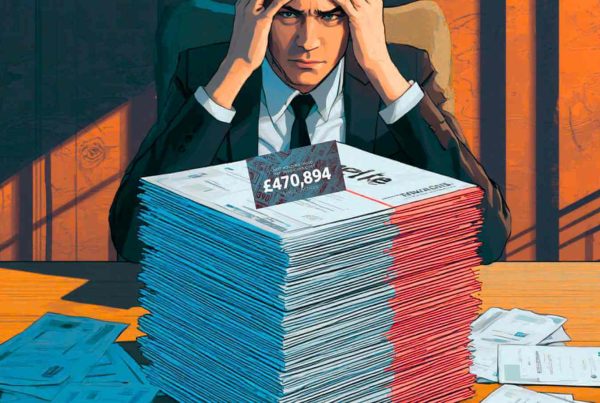
The First-tier Tribunal has dismissed a taxpayer's appeal against HMRC's refusal to allow £470,894 of input VAT, providing another important reminder that the right to recover VAT depends not only…

A recent Tax Tribunal case is a helpful reminder that getting tax advice over a pint with your mate down the pub might not be the best approach. In the…

Rodents eating taxpayer expense records was a feature deemed largely irrelevant by the Tax Tribunal in the case of Mukuna v Revenue and Customs UKFTT 1020 (TC). That is notwithstanding…