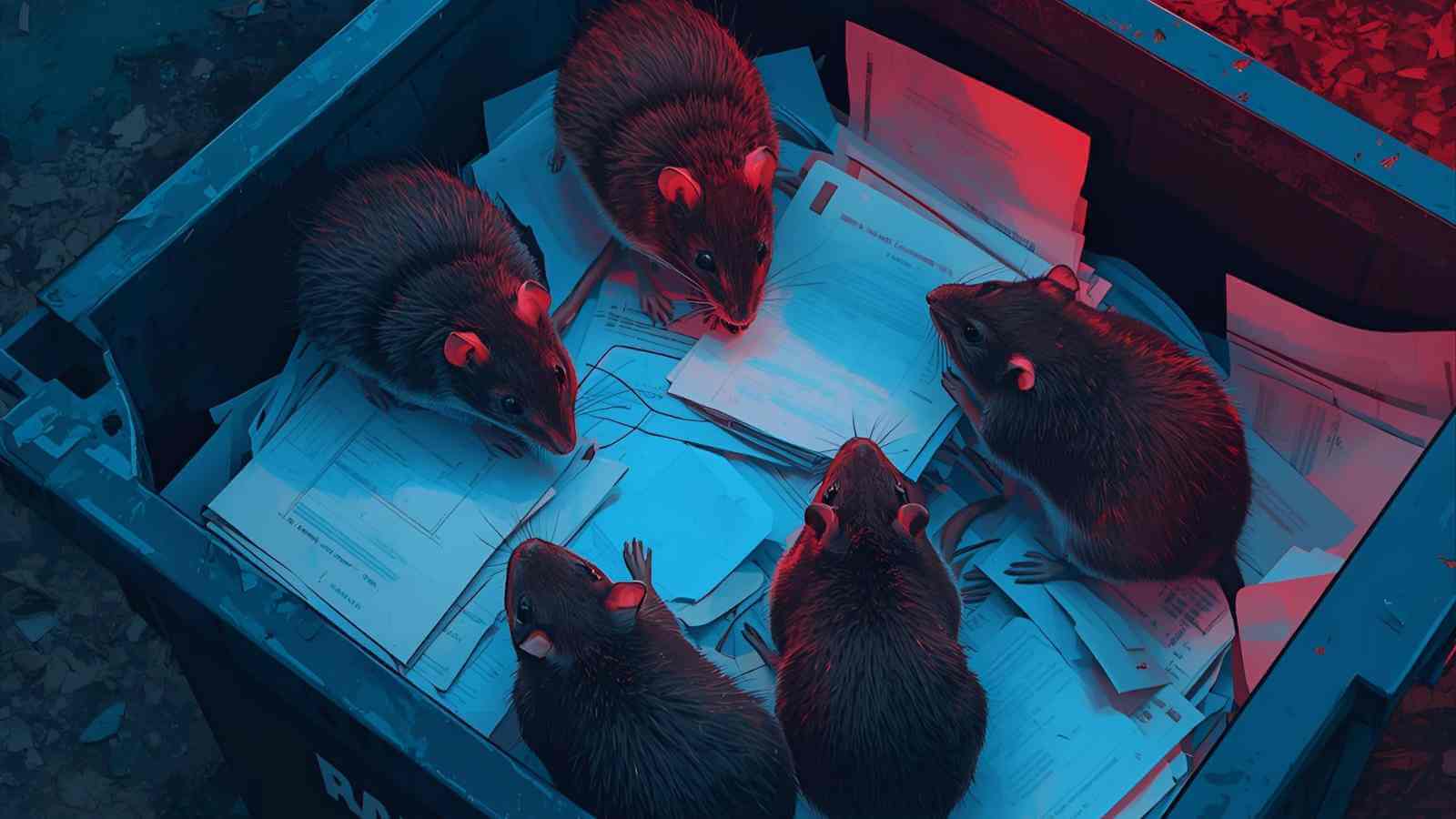
Rodents eating taxpayer expense records was a feature deemed largely irrelevant by the Tax Tribunal in the case of Mukuna v Revenue and Customs [2025] UKFTT 1020 (TC). That is notwithstanding that the taxpayer, according to HMRC, provided no evidence of the rodent infestation responsible for the consumption of relevant records:
The original receipts for these expenses were unavailable as, according to the appellant, they had been stored in his loft and had been eaten by rodents.
In any event, regardless of any ravenous rodents raiding the records, the expenses claimed could not be shown to be wholly and exclusively for a relevant tax deduction permitted.
Furthermore, the taxpayer’s expenses claim on the tax returns often appear related to protective clothing but it seems he was not required to incur such expenses for his employment. Yet the taxpayer submitted that his employer’s equipment was inadequate.
This was not, it seems, a strong claim by the taxpayer. In fact, the case highlights the need to be comprehensive, consistent and credible if you are going to challenge HMRC’s position at Tribunal.
Judgment Highlights

It appears clear that the Tax Tribunal was not overly taken in by the taxpayer’s assertions:
Firstly, he has provided no documentary evidence of the expenditure. It may very well be, as he has submitted, that the relevant receipts which he needs to justify the expenditure are unavailable because they were eaten by rodents. But the reason he is not able to provide the relevant evidence is largely irrelevant when it comes to the amount of tax due.
We were taken through some of his bank statements in an attempt by the appellant to suggest that some of the outgoings were for the items for which he has claimed allowable expenses. We are afraid that there was no correlation between the outgoings on the one hand and the items on which those outgoings were alleged to have been incurred, on the other. There was certainly no identification of those outgoings with the items of expenditure set out in his letter of 28 February 2024.
The appellant claims that the loans are evidence of qualifying expenditure. We disagree. The loans are simply money which was paid to the appellant. They cast no light on the nature of the expenditure which the appellant asserts. They could have been used for something completely different. There is no documentary correlation between the loans on the one hand and the use to which those loans were put, on the other.
Secondly, we are of the view that we cannot rely on the appellant’s oral or written evidence.
It seems to us that the appellant is just as uncertain of the purported expenditure as we are. In his letter of 28 February 2024, he identifies what are effectively round sum amounts for a number of items of expenditure. For example, in 2020/2021; £5,000 for N 95 masks, £5,500 for protective clothing, and £4,000 for anti-viral products. By the time he wrote this letter his documents had been purportedly eaten by rodents. We do not understand, therefore, where he obtained these figures from. In any event, we think it is inherently unlikely that any amounts that he spent not only in this year (as evidenced by the foregoing figures) but in other years, were similar round sum amounts.
If he did indeed spend money on those items, then it is highly likely that the amounts would be more precise and specific than those set out in the letter.
Finally, the amounts claimed in his original returns, then as subsequently amended, and then as set out in the letter of 28 February 2024, are inconsistent with each other. This is clear from a comparison of the figures set out in that letter with those set out in Appendix 2.
…
The fluidity of these numbers suggests to us that the appellant was grasping at straws. He had no records of the amount spent, and if he did indeed spend money on the items alleged, he is not in a position to provide any evidence as to the amount so spent.
And so he has not been able to satisfy the burden of establishing that, on balance, he did spend these amounts on the items so claimed.
Furthermore, in light of the claims for PPE, for years which clearly pre-date the onset of the Covid pandemic in the UK, we have serious reservations as to the veracity of his testimony regarding expenditure on those items. In 2018/2019 (i.e. before April 5, 2019) the appellant has claimed that he spent £4,000 on N95 masks. This is inconceivable. At that stage the UK was wholly ignorant of the existence, let alone of the threat, of the Covid virus. The appellant’s suggestion that he had known of it and had taken steps to protect himself against it, is risible.
We wholly reject this explanation as evidence that he incurred expenditure in the amounts claimed on that equipment. This causes us to treat, with considerable suspicion, the evidence (including his oral evidence, the amounts set out in his correspondence and the amounts reflected in the amendments he made to his returns) he has given regarding the nature and amounts of the alleged expenditure.
…
HMRC consider that there are no grounds for making a special reduction. We agree. The appellant’s circumstances are not sufficiently special to warrant a reduction. Neither the rodent infestation nor the Covid pandemic nor his financial situation are sufficiently special that the penalty should be reduced, bearing in mind that he has made what in our view have been excessive claims which are based on what is tantamount to fraudulent behaviour (see Tooth at [83]). Furthermore, the appellant has not been able to persuade us that HMRC’s decision not to reduce the penalty is flawed.

For a free no obligation chat about any of the matters detailed above, please do get in touch for help. An expert will call you back or if you prefer exchange emails.
We can explore your situation and consider the best way to help you and your business needs. You can call us 020 3925 3613 or fill in the form below and will get back to you quickly. We Know Insolvency Inside Out.


What Next?
Expert Advice Is Just A Click Away
If you have any questions then contact us as soon as possible for advice. Oliver Elliot offers a fresh approach to insolvency and the liquidation of a company by offering specialist advice and services across a wide range of insolvency procedures.
Our expertise is at your fingertips.
Disclaimer
This page is not legal advice and is not to be relied upon as such. This article is provided for information purposes only. You should take independent advice on the facts of your case. No liability is accepted for reliance upon this post.
Recent Posts / View All Posts