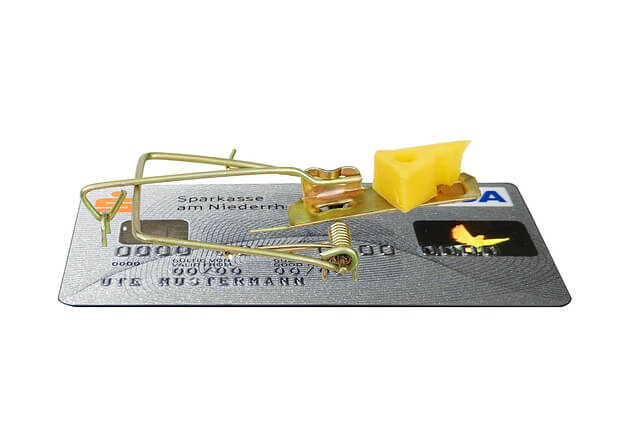
Are you a Director concerned about personal payments?
Are Directors Entitled To Make Personal Payments? If you are a creditor of an insolvent company or a bankruptcy, Oliver Elliot can help you address your claim and concerns arising from the insolvency.
Director Company Payments
A Director is not entitled to extract monies from a company without an agreement authorising the same.
Summary Of Directors Entitlement To Personal Payments Case
In the matter of Vanquish Developments Limited – In Liquidation (“the Company”), the Liquidator, Elliot Green (CEO of Oliver Elliot) succeeded in obtaining judgment for monies that were paid by the Company to the Directors, David Danaher and Sarah Danaher, as personal payments.
In a short judgment handed down by Insolvency and Companies Court Judge Prentis on 28 May 2021 the following points were made about such matters in the circumstances of this case:
- Personal payments do not ascertain the right of entitlement by virtue of the fact that they are not made to the detriment of the company.
- Absent an agreement between Directors and a Limited Company there is no entitlement to a Director to have personal payments.
- A company’s money is not there to meet the everyday living expenses of its Directors.
The Directors struggled based on their own evidence. The Court found that:
- the personal payments were not expenses of the Company;
- they were not declared as dividends;
- there was no evidence that they arose from any employment agreement.
Judgment
-
Following the judgment in which I adjourned the trial of this matter, Ms Pratt on behalf of the liquidator Mr Green nevertheless seeks judgement for one element of the claim. That is for the personal payments which amount to £9,790.11. The description given to them is actually derived from the annotations to the company bank statements made by the first respondent.
-
In their evidence, the respondents agree that is the figure for the personal payments; indeed they indicate that there may be other personal payments as well. The reason they say that they are not liable to repay them to the company is because they were not made to the detriment of the company. “We were working for the company and completing valuable works to the benefit of the company although no margins of profit were shown we would have needed to take in more investment from the pledged funds in order to build up through the project before profits could be seen”.
-
Even on its face, that does not provide any explanation as to why the respondents ought not to be liable as directors of the company for company funds which they have received personally. It is not averred by them that there was any employment agreement nor that there was a contact for their services as directors, nor that there were ever dividends declared. These are not described by them as being expenses of the company. In their interview with Mr Green on 25 July 2018, among other things Mr Danaher said: “I often use the business card for personal expenses. I did use the business card for personal expenses rather than take – we never took a salary or we never took a fixed amount”.
-
As I say, there is no agreement identified that they were entitled to do that. A little later he said, “I mean how can you imagine that we survived with no income from 2014 to 16”.
-
As directors they had no right to pay company monies to themselves unless that had been agreed with the company. Absent any agreement, the payment out of those monies for that purpose was improper. The monies invested in the company were invested in order to facilitate the construction of the motor racing track in Egypt. They were not there for the respondents to meet their everyday living expenses.
-
Therefore, even on this evidence, this would be a breach of Section 171 of the 2006 Companies Act. The breach can be put in terms of other sections as well. Section 172 imports the duty to promote the success of the company. There is simply no evidence that the respondents did anything other than to consider their own wellbeing in making these payments. Absent the agreements which I have outlined, no reasonable director acting properly could have thought that it was proper to make these payments, and as we do not have insight into their mind it would following from HLC that there would be liability under this head as well. There is an alternative, or there is an addition, to that which is that the evidence is that the company was insolvent at the time, so therefore the respondents ought to have been particularly considering the creditors of the company. We are not told who made or decided to make these payments, although we can see that Mrs Danaher received some of them directly. Whoever it was, there is no evidence of supervision from the other director; that would itself be a breach of section 172, as well as 174.
-
In the circumstances it seems to me that even on the respondents’ own evidence there can be no defence in respect of the personal payments, which they have themselves acknowledged as having received personally. I will therefore make an order in respect of those for payment within 28 days.
What Next? Expert Advice Is Just A Click Away
If you have any questions in relation to Are Directors Entitled To Make Personal Payments? then Contact Us as soon as possible for advice. Our expertise is at your fingertips.
Disclaimer: Are Directors Entitled To Make Personal Payments?
This page: Are Directors Entitled To Make Personal Payments? is not legal advice and should not be relied upon as such. This article Are Directors Entitled To Make Personal Payments? is provided for information purposes only. You can Contact Us on the specific facts of your case to obtain relevant advice via a Free Initial Consultation.
This page contains public sector information licensed under the Open Government Licence v3.0.