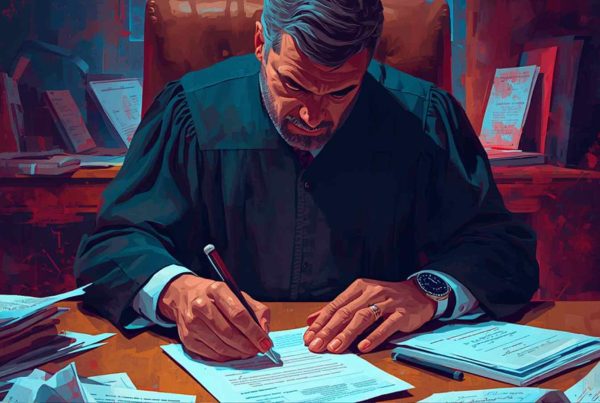
What Is Misfesance And Breach Of Duty?

Directors owe Directors’ duties to their companies and misfeasance and breach of duty can arise when those duties are breached due to their misconduct.

Such Directors’ duties are amongst other things to act within the scope of their powers, a duty of loyalty, to promote the success of the company, to avoid conflicts of interest, not to secretly profit and to act in good faith in the best interests of the company. Those duties have been set out in the Companies Act 2006 Directors’ duties. These are set out in Part 10 Chapter 2 of the Companies Act 2006.

What Is Misfeasance And Breach Of Duty By Directors

In a nutshell, a Director is an individual that is authorised to operate the company for the benefit of the Shareholders but their core requirement is to safeguard its assets for the company’s benefit (not their own personal benefit) and to promote the success of the company (not themselves).

When a company is insolvent a duty is triggered known as the Creditor Duty. This is a variation of the general Directors’ duties and requires a Director to shift their focus towards the interests of creditors and away from those of the Shareholders when a company is facing having to go into Liquidation.

Requirements For A Breach Of Duty Claim

In order to bring a breach of duty claim or a claim for misfeasance it is generally necessary to identify:

  • the relevant breach of duty that has arisen
  • the consequences flowing from the breach of duty or misfeasance
  • whether the person responsible for the breach of duty has had any personal gain or benefit from it
  • quantify and evidence the loss arising as a consequence of the breach of duty

What Happens If You Are In Breach Of Duty Or Trust?

If a director has misapplied or retained any property of the company then on an application to court as to that fact a director can be compelled to repay, restore or account for the money or property of the company and thereby contribute via payment of compensation towards the assets of the company for the loss and or damage caused.

The availability of a remedy to address misfesasance is set out in Section 212 of the Insolvency Act 1986. A claim under this section can be brought by a company in liquidation through its liquidator.

This can commonly arise where Directors personally have benefitted at the expense of their companies. In a misfeasance claim whereit is proved that a director is himself the recipient of a benefit from the company, the evidential burden is then on him to prove that the payment was proper as was set out in the case of Hellard & Anor (Liquidators of HLC Environmental Projects Ltd) v Carvalho [2013] EWHC 2876 (Ch).

The underlying principle is that directors are not free to take action which puts at real (as opposed to remote) risk the creditors’ prospects of being paid, without first having considered their interests rather than those of the company and its shareholders. If, on the other hand, a company is going to be able to pay its creditors in any event, ex hypothesi there need be no such constraint on the directors. Exactly when the risk to creditors’ interests becomes real for these purposes will ultimately have to be judged on a case by case basis. Different verbal formulations may fit more comfortably with different factual circumstances.

GET IN TOUCH FOR HELP

For a free no obligation chat about any of the matters detailed above, please do get in touch for help. An expert will call you back or if you prefer exchange emails.

We can explore your situation and consider the best way to help you and your business needs. You can call us 020 3925 3613 or fill in the form below and will get back to you quickly. We Know Insolvency Inside Out.

Author: Elliot Green
Last Updated: August 17, 2026

contact-us-and-get-called-back-red1.png

Name

100% Confidential Advice
We Know Insolvency Inside Out

Liquidation Litigation

Share This Page!

What Next?

Expert Advice Is Just A Click Away

If you have any questions in relation to What Is Misfeasance And Breach Of Duty By Directors then contact us as soon as possible for advice. Oliver Elliot offers a fresh approach to insolvency and the liquidation of a company by offering specialist advice and services across a wide range of insolvency procedures.

Our expertise is at your fingertips.

Name

By submitting this form you agree with the storage and handling of your data by Oliver Elliot. For more details, please read our Privacy Policy.

Opt in

Disclaimer: What Is Misfeasance And Breach Of Duty By Directors

This page is not legal advice and is not to be relied upon as such. This article What Is Misfeasance And Breach Of Duty By Directors is provided for information purposes only. You should take independent advice on the facts of your case. No liability is accepted for reliance upon this post.

Recent Posts / View All Posts

Write Off The Loan, Write In The Taxman

Write Off The Loan, Write In The Taxman 

| Director Transactions, HMRC, Liquidation | No Comments
There are occasions when tax law achieves something seemingly rather remarkable: it manages to be perfectly logical and yet may arguably produce some inconsistency at the same time. The recent…
Insolvency Practitioner Fees: When Nobody Can Mark the Homework The Judge Will Insolvency Practitioner Fees When Nobody Can Mark the Homework The Judge Will

Insolvency Practitioner Fees: When Nobody Can Mark the Homework The Judge Will

| Liquidation | No Comments
The recent Float Capital Ltd, In the Matter Of EWHC 1891 (Ch) judgment is not simply another decision about insolvency practitioners' remuneration. It is a reminder that where the normal commercial…
Liquidator’s Assignment Of Claims Challenged On The Basis Of Validity Of Appointment

Liquidator’s Assignment Challenged On The Basis Of Validity Of Appointment

| Liquidation | No Comments
The case of Henderson & Jones Ltd v Chambers & Anor (Re Priors Group Ltd) EWHC 1152 (Ch) involved dismissal of a summary judgment application issued by the applicant who…
Liquidator’s Claim Defeated By Disclosure Difficulty

Liquidator’s Claim Defeated By Disclosure Difficulty

| Liquidation | No Comments
Disclosure is an important part of litigation. At its core, it serves to function as a means of furthering attempts at a fair trial. The consequences of inadequate disclosure can…