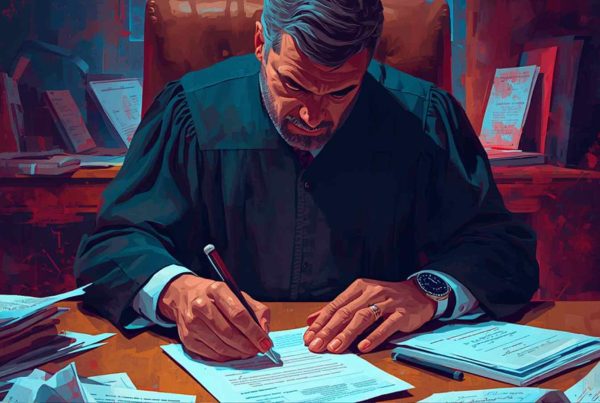
Overview Of Section 217 Personal Liability Defence
A Section 217 personal liability defence may arise on the grounds of fairness and injustice.
This was highlighted in the recent case that went to the Court of Appeal, PSV 1982 Ltd v Langdon [2022] EWCA Civ 1319. This long standing litigation was sparked following the christening of the boat notably named “Elusive“. The Elusive was the subject of an earlier post called How To Be Personally Liable For Phoenix Company when the judgment of first instance sprouted.
In that case Mr Langdon (whose appeal failed) accepted that he was in breach of the phoenix company provision in Section 216 of the Insolvency Act 1986 which prohibits the reuse of a company name by a Director when a company goes into insolvent Liquidation.
The effect of 217 of the Insolvency Act 1986 is that a breach of Section 216 can give rise to a liability being established that the Director is then jointly liable with the successor company for the debt. The typical instance in which this will arise is when the successor company uses the prohibited name operated by the same Director.
In this case the company that first went into Liquidation on 12 October 2017 was Discovery Yachts Limited and as a result the name “Discovery Yachts” became a prohibited name for Mr Langdon. Later on Discovery Yachts Group Limited (“DYGL”) went into Administration and then Liquidation. A court found that DYGL was liable for an agreement entered into in September 2017.
Ground Of Section 217 Personal Liability Defence
The first grounds of appeal gave rise to an interesting consideration of the rules of natural justice and fairness because Mr Langdon has not been a party to the judgment against DYGL and this led his Counsel to say:
In summary, Mr Chichester-Clark who appeared with Mr Baldock for Mr Langdon, submits that section 217 would have to contain clear words to justify the conclusion that Parliament intended to deprive a director or former director of his right to defend himself from being held personally liable for a company debt which he disputes on substantial grounds, even where that liability has been established against the company. He says that the director is entitled to begin with a clean sheet and that the creditor must prove the debt against him. In this regard, he relies upon a passage in the judgment of Megarry V-C in Gleeson v Wippell [1977] 1 WLR 510 at 516B as follows:
“Any contention which leads to the conclusion that a person is liable to be condemned unheard is plainly open to the gravest of suspicions. A defendant ought to be able to put his own defence in his own way, and to call his own evidence. He ought not to be concluded by the failure of the defence and evidence adduced by another defendant in other proceeding unless his standing in those other proceedings justifies the conclusion that a decision against the defendant in them ought fairly and truly to be said to be in substance a decision against him.”That was a case in which a defendant sought to strike out proceedings for copyright infringement on the basis that it had already been held in earlier proceedings against a different defendant that the shirt in question did not infringe the claimant’s copyright and accordingly, it was frivolous, vexatious and an abuse of process to seek to litigate all over again what had already been decided against her. Megarry V-C declined to strike out the proceedings.
Mr Chichester-Clark says that: there are no clear words in section 217; it is not the purpose of the legislation to impose what he describes as a penalty; and if it were, the effect would be unjust to directors. Accordingly, the section should not be construed to deprive the director of the ability to dispute the company debt or liability because it has been proved in proceedings against the company to which he was not a party and was not privy. The director should be entitled to defend himself.
In oral submissions, Mr Chichester-Clark also relied upon Ward v Savill [2021] EWCA Civ 1378 in which Sir Julian Flaux CHC held that the appellants could not rely upon a declaratory judgment granted to them in earlier proceedings to which the respondent was not a party, to found claims against her in further proceedings. He held that it was clear that the declarations which had been made in the first proceedings were only made against the original defendants and not against the world ([76] and [77]).
The Chancellor also considered the rule in Hollington v Hewthorn which Mr Chichester- Clark says is relevant here. In that case, the plaintiff sought to rely in civil proceedings upon the defendant driver’s criminal conviction for careless driving as evidence of his negligence. The Court of Appeal held that evidence of the conviction was inadmissible. The Chancellor stated at [33] of his judgment in the Ward case that although that conclusion was reversed by section 11 of the Civil Evidence Act 1968, the general statement of principle as to the effect of a judgment on someone who is not a party to it remains good law. He cited a passage from the judgment of Goddard LJ at [34] as follows:
“A judgment obtained by A against B ought not to be evidence against C, for, in the words of the Chief Justice in the Duchess of Kingston’s Case (1776) 2 Sm LC 13th ed. 644, “it would be unjust to bind any person who could not be admitted to make a defence, or to examine witnesses or to appeal from a judgment he might think erroneous: and therefore … the judgment of the court upon facts found, although evidence against the parties, and all claiming under them, are not, in general, to be used to the prejudice of strangers.” This is true, not only of convictions, but also of judgments in civil actions. If given between the same parties they are conclusive, but not against anyone who was not a party. If the judgment is not conclusive we have already given our reasons for holding that it ought not be admitted as some evidence of a fact which must have been found owing mainly to the impossibility of determining what weight should be given to it without retrying the former case. A judgment, however, is conclusive as against all persons of the existence of the state of things which it actually affects when the existence of that state is a fact in issue. Thus, if A sues B, alleging that owing to B’s negligence he has been held liable to pay xl. to C, the judgment obtained by C is conclusive as to the amount of damages that A has had to pay C, but it is not evidence that B was negligent: see Green v. New River Co (1972) 4 Term Rep. 589, and B can show, if he can, that the amount recovered was not the true measure of damage.”The Chancellor considered the scope of the rule in Hollington v Hewthorn further at [81] as follows:
“. . . It is quite clear from that passage that the appellant’s purported distinction between factual findings in a judgment which are not binding on a stranger to it and the legal effect of a judgment, which the appellants contend is binding on a stranger, is not a distinction recognised by the rule. The citation with approval form the Duchess of Kingston’s case refers to “the judgment of the court upon facts found” distinguishing between the facts and the judgment and, as Mr Mather correctly pointed out, the circumstances of the Duchess of Kingston’s case itself demonstrate that the rule is not limited to findings of fact but extends to the legal consequences of those findings, as determined by a court its judgment. ”
Mr Chichester-Clark submits, therefore, that the judge’s interpretation of section 217 is wrong because it would contravene the Hollington v Hewthorn principle.In effect, therefore, Mr Chichester-Clark submits that section 217 should be construed to mean that despite the existence of a judgment debt against a company which was regularly obtained, where the director disputes the debt or liability of the company in question on substantial grounds, if the director was not party to the proceedings against the company, the creditor must commence separate further proceedings in order to establish the debt as against the director in order to be able to avail itself of section 217.
However, the Court rejected these submissions with the following dismissal:
In my judgment that is not the result here. The position of the director who will have committed a criminal offence under section 216(4) must be weighed against the creditor who has suffered as a result of his conduct. In those circumstances it is hard to see that it is contrary to what Parliament must have intended that the creditor should, if possible, be saved the expense and time of further proceedings against the director to establish the company’s debt. In any event, the director retains numerous protections: (i) in many cases the director will have been involved with the company at the time that when the debt or liability was incurred and will have knowledge of the factual background and the opportunity to participate in the action against the company; (ii) a person who is not a party but who is directly affected by a judgment or order may apply to have it set aside or varied: CPR r40.9 or in certain circumstances, might seek to appeal the judgment; and (iii) a director could avoid the consequences of the section altogether, either by making an application for permission to act in circumstances which would otherwise be prohibited under section 216 under Rule 22 of the Insolvency (England and Wales) Rules 2016 or by resigning as a director.
Oliver Elliot Observation
Although Mr Langdon’s appeal failed the possibility of a defence to a claim under Section 217 of the Insolvency Act 1986 in respect of potential injustice in general terms still appears open because of the following comments in the judgment:
Mr Grantham conceded that if we were concerned with a debt based upon an invoice admitted to proof by the liquidator of the company, in reality a creditor would be unlikely to be able to sue the company on the invoice in order to obtain a judgment because of the statutory moratorium on proceedings. In those circumstances, if the director disputes the company’s debt, it might well be necessary for the creditor to sue the director in order to be able to determine what the company’s debt was and enforce his remedy under section 217. It was also accepted that in the case of an invoice, the director would not be able to challenge the admission to proof and the value placed on the liability by the liquidator unless he was a shareholder or creditor of the company, other than in his capacity as the potential target under section 217. We are not concerned with such circumstances here.
Are you a UK company Director?
If you are a Director of an insolvent company or a bankruptcy, Oliver Elliot can help you. We Know Insolvency Inside Out.

Share This Page!
What Next?
Expert Advice Is Just A Click Away
If you have any questions in relation to Section 217 Personal Liability Defence then contact us as soon as possible for advice. Oliver Elliot offers a fresh approach to insolvency and the liquidation of a company by offering specialist advice and services across a wide range of insolvency procedures.
Our expertise is at your fingertips.
Disclaimer: Section 217 Personal Liability Defence
This page Section 217 Personal Liability Defence is not legal advice and should not be relied upon as such. This article is provided for information purposes only. You can contact us on the specific facts of your case to obtain relevant advice via a Free Initial Consultation.
Recent Posts / View All Posts