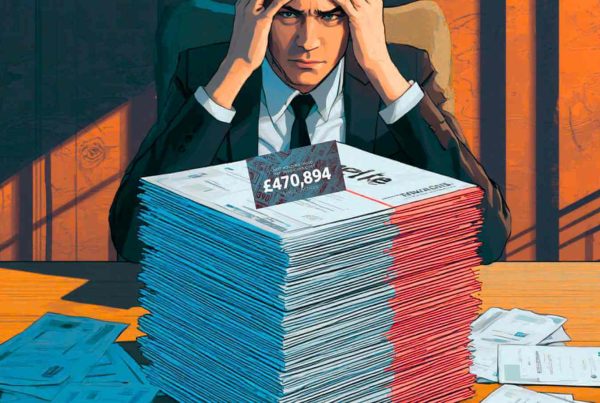
Overview Of How To Appeal An HMRC Late Filing Penalty
Want to know how to appeal an HMRC late filing penalty? First, imagine leaving the filing of your self assessment personal tax return until 31 January and as the clock ticked towards midnight being distracted by the need for some of Jim Carrey’s well needed shut-eye (see his speech at the 2016 Gold Globe Awards) and then waking up on 1 February having not dreamt just any old dream, no sir; you dreamt a dream that you had filed your tax return in time.
However, when you awoke on the morning of 1 February it wasn’t true at all. As this realisation seized hold of you the first words uttered by Charles (Hugh Grant) at the start of Four Weddings And A Funeral did not just sprout in your mind, no sir; you joined in with some additional embroidery.
Don’t leave it until shortly prior to midnight 31 January to start filing your return.
Late Tax Filing Legislation
How to appeal an HMRC late filing penalty arises from a penalty regime that provides for the failure to file tax returns on time and is set out in Schedule 55 of the Finance Act 2009. This is a key piece of legislation that keeps most taxpayers on the straight and narrow with HMRC.
In a government Press release dated 1 February 2019 commenting that Over 93% of taxpayers file tax returns by the deadline the compliance of the overwhelming majority of taxpayers was highlighted. It seems by far the vast majority of people did not have that ‘Charles’ early morning moment.
So successful is this legislation that on 1 February 2019 that Mel Stride, then Financial Secretary to the Treasury gave taxpayers a pat on the back:
It is great to see so many people completing their Self Assessment by the deadline. Their income tax contributions have helped towards funding the UK’s vital public services including hospitals, schools and the emergency services.
Successfully Appealing Late Filing Penalty
If a taxpayer fails to file their tax return by the due date which for an electronic return is 31 January in the year following the preceding 12 months to 5 April, then by virtue of paragraph 3 of Schedule 55 of the Finance Act 2009 a penalty of £100 sprouts. So for example at the time of drafting this article on 27 January 2023 the deadline for filing personal tax returns for the tax year ended 5 April 2022 is just a few days away on 31 January 2023.
The tax legislation provides two opportunities for a taxpayer to successfully appeal an HMRC tax late filing penalty, being ‘reasonable excuse’ and ‘special circumstances’.
Reasonable Excuse
Under paragraph 23 of Schedule 55 of the Finance Act 2009 liability for the HMRC tax late filing penalty will not arise if the taxpayer has reasonable excuse. However, the reasonable excuse will not include the following situations:
- Inability to pay the penalty.
- Reliance on another individual unless reasonable care was taken to avoid the failure.
- Upon the reasonable excuse ceasing the taxpayer did not address the failure without delay.
Reasonable excuse for the failure to file a tax return on time is assessed objectively from the perspective of the reasonable thing done by a responsible person.
Special Circumstances
Under paragraph 16 of Schedule 55 of the Finance Act 2009 liability for the HMRC tax late filing penalty may be reduced if there are special circumstances. However, special circumstances will not include the following situations:
- Inability to pay the penalty.
- The notion of an ability to offset the penalty against some other tax overpayment.
This test is a matter of HMRC’s discretion. The Tax Tribunal does not review the facts that HMRC considered; it reviews how HMRC came to its decision to see if it has been reasonable procedurally.
Cruise v HMRC
The case of Cruise v Revenue & Customs [2023] UKFTT 41 (TC) was a classic case of how not to appeal an HMRC late filing penalty. That case resulted in the taxpayer’s HMRC late filing penalty appeal being dismissed.
Grounds of Late Filing Penalty Appeal
Mr Cruise said he had no notice at his home address of tax that needed to be paid or of penalties sprouting. He said there was no proof that HMRC contacted him prior to October 2021 in respect of his personal tax return filing. In addition, he said he employed an accountant who he had relied upon.
Reasonable Excuse Review
Mr Cruise was held by the First Tier Tax Tribunal not to have satisfied the reasonable excuse threshold. He suggested notices were not sent to his home address but he had registered for online services.
He referred to confusion between company tax returns and personal tax returns. However, Mr Cruise had submitted a personal tax return for the previous tax year.
The Tribunal found confusing his reliance on his accountant when saying he was unaware of the need to file a personal tax return. However, it is well established that reliance on an accountant does not usually outflank matters or provide a reasonable excuse. See the earlier post on this site Reliance On Tax Agent Defence For Late Appeal To Tax Tribunal which refers to the position in HMRC v M H Katib [2019] UKUT 189 on such matters.
Special Circumstances Review
The Tribunal did not consider HMRC’s position on this front to be unreasonable.