
The key distinction between tax avoidance and tax evasion is with the latter you can end up doing time but neither are necessarily lawful. In this article the differences are developed for the reader.

What is Tax Evasion?
Is tax avoidance legal? Before you consider that, what is unlawful. Tax evasion is illegal. Tax evasion is the activity of deliberately avoiding tax, typically through dishonestly declaring income, gains, losses and expenses on any tax return that needs to be filed.
It includes failure to file returns and report on such matters when required to do so. Therefore even if you do nothing you can still be considered a tax cheat and culpable to be prosecuted for the offence of Cheating the Public Revenue. You can if indicted and convicted sent to prison.
What is Tax Avoidance?
At its most simplistic tax avoidance is arranging ones affairs to minimise the amount of tax to be suffered. In many instances there is deemed to be nothing wrong with this and it is legal.
However, more aggressive tax avoidance arrangements may not be so successful in their avoidance of the liability to tax. HMRC’s introduction to tax avoidance considers that tax avoidance is bending of the rules in its definition:
Tax avoidance involves bending the rules of the tax system to try to gain a tax advantage that Parliament never intended.

What is Aggressive Tax Avoidance?
Typically aggressive tax avoidance is the arrangement of transactions designed to defeat a liability to a tax charge. A common feature of such arrangements is that the transactions appear to have no commercial rationale or purpose other than to avoid tax.
Tax Avoidance Cases
The Ramsay Principle involved an approach to looking at the whole of a transaction as opposed to its various parts.
The Ramsay Decision
Ever since WT Ramsay Ltd vIRC, the courts have tended to assume that tax legislation in particular are concerned with the characterisation of the entirety of transactions which have a commercial unity rather than the individual steps into which some transactions may be divided. This approach does not deny the existence or legality of the individual steps but may deprive them of significance for the purposes of the characterisation required by the statute.
Burmah Case
In the Burmah case, a series of circular payments which left the taxpayer company in exactly the same financial position as before was not regarded as giving rise to a “loss” within the meaning of the legislation.
Furniss Case
In Furniss, the transfer of shares to a subsidiary as part of a planned scheme immediately to transfer them to an outside purchaser was regarded as a taxable disposition to the outside purchaser rather than an exempt transfer to a group company.
Carreras Case
In Carreras the transfer of shares in exchange for a debenture with a view to its redemption a fortnight later was not regarded as an exempt transfer in exchange for the debenture but rather as an exchange for money.
In each case the court looked at the overall effect of the composite transactions by which the taxpayer company in Burmah suffered no loss, the shares in Furniss passed into the hands of the outside purchaser and the vendors in Carreras received cash.
On the true construction of the relevant provisions of the statute, the elements inserted into the transactions without any commercial purpose were treated as having no significance.
Commercial Reality
It is going too far however to say that transactions without commercial sense and for the purpose of tax avoidance will always fail to avoid tax. It therefore follows that the answer to the question, Is Tax Avoidance Legal? is not always no.
MacNiven shows the need to focus carefully upon the particular statutory provision and to identify its requirements before one can decide whether circular payments or elements inserted for the purpose of tax avoidance should be disregarded or treated as irrelevant for the purposes of the statute. It was said by Lord Nicolls:
My Lords, I confess that during the course of this appeal I have followed the same road to Damascus as Peter Gibson LJ. Like him, my initial view, which remained unchanged for some time, was that a payment comprising a circular flow of cash between borrower and lender, made for no commercial purpose other than gaining a tax advantage, would not constitute payment within the meaning of section 338. Eventually, I have found myself compelled to reach the contrary conclusion.
Want To Liquidate A Company With Tax Debts?

GET IN TOUCH FOR HELP
For a free no obligation chat about any of the matters detailed above, please do get in touch for help. An expert will call you back or if you prefer exchange emails.
We can explore your situation and consider the best way to help you and your business needs. You can call us 020 3925 3613 or fill in the form below and will get back to you quickly. We Know Insolvency Inside Out.

Author: Elliot Green
Last Updated: October 18, 2026

Tax Guides
Share This Page!
What Next?
Expert Advice Is Just A Click Away
If you have any questions in relation to Is Tax Avoidance Legal? then contact us as soon as possible for advice. Oliver Elliot offers a fresh approach to insolvency and the liquidation of a company by offering specialist advice and services across a wide range of insolvency procedures.
Our expertise is at your fingertips.
Disclaimer: Is Tax Avoidance Legal?
This page is not legal advice and is not to be relied upon as such. This article Is Tax Avoidance Legal? is provided for information purposes only. You should take independent advice on the facts of your case. No liability is accepted for reliance upon this post.
Recent Posts / View All Posts

There are occasions when tax law achieves something seemingly rather remarkable: it manages to be perfectly logical and yet may arguably produce some inconsistency at the same time. The recent…
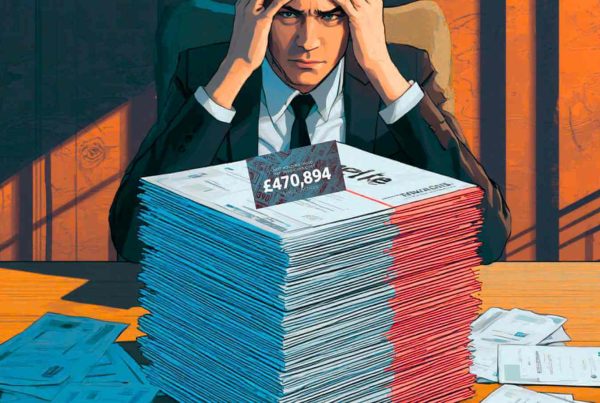
The First-tier Tribunal has dismissed a taxpayer's appeal against HMRC's refusal to allow £470,894 of input VAT, providing another important reminder that the right to recover VAT depends not only…

A recent Tax Tribunal case is a helpful reminder that getting tax advice over a pint with your mate down the pub might not be the best approach. In the…

Rodents eating taxpayer expense records was a feature deemed largely irrelevant by the Tax Tribunal in the case of Mukuna v Revenue and Customs UKFTT 1020 (TC). That is notwithstanding…