
You can expect HMRC to pursue the debt they are owed because it is public money and it is a an involuntary creditor in almost every insolvency case. Whilst a company that is in trouble, directors may hope that some creditors might give up or write off the debt. Unfortunately, if one of those creditors is HMRC, this will not happen. HMRC is as like many creditors, persistent, and if your company owes tax, it’s wise to assume they will pursue it.
Public Duty To Pursue Taxpayer’s Money
HMRC is not a typical trade creditor that will necessarily apply commercial decision making into how it operates like a normal business. It’s the government’s tax collection agency, responsible for safeguarding public revenue. HMRC has a duty to collect the tax owed as part of its public role and it operates on the basis of government polices and strategies.
The money your company owes, whether VAT, PAYE, Corporation Tax or National Insurance, is considered public money. If HMRC were to turn a blind eye to unpaid tax, it would set a poor precedent and undermine confidence in the system of collecting in tax. Payment of tax is not a voluntary thing; it is mandatory.
So, while a supplier might walk away to avoid costly court action, HMRC will see enforcement as part of its core duty, hence why it has an enforcement division dedicated to pursuing the recovery of unpaid taxes due.
HMRC Has Strong Collection Powers
HMRC has extensive legal powers to recover debts, and it will without question use them. These include:
- Issuing Notices of Requirement for security deposits.
- Making personal liability notices against directors for unpaid National Insurance.
- Using distraint powers to seize business assets.
- Issuing winding-up petitions for unpaid debt.
- Engaging debt collection agencies or pursuing court judgments.
These tools make it easier and efficient for HMRC to act than many private creditors, which is why they do it routinely. It has economies of scale.
They Monitor Company Activity Closely
Unlike most creditors, HMRC has a direct line into your company’s affairs. They already know when PAYE and VAT returns are late, if a time-to-pay arrangement has failed. This internal data allows them to react by using the extensive information resource available to it. In fact, it’s often HMRC who trigger a company’s compulsory liquidation by filing a winding-up petition. It is the most common creditor to use this enforcement provision.
If your business has been delaying payments or filing erratic returns, it’s already very likely to be on HMRC’s radar.
Writing Off Tax Debt Is Rare
Yes, but not often is the answer to the question Does HMRC ever write off debt.
While HMRC may agree to a time to pay arrangement in some cases, it will not, however, agree to forgive or write off debt voluntarily. They may write off irrecoverable debts when a company is dissolved or enters liquidation, but that’s not a choice; it’s because they are no longer able to legally recover it.
Given its obligation to pursue matters, the answer to the question, can you write off HMRC tax debts is perhaps hopelessly unrealistic without formal insolvency proceedings. As a result, feel free to get in touch for a free initial consultation about the options available to you to clear HMRC tax debts.

GET IN TOUCH FOR HELP
For a free no obligation chat about any of the matters detailed above, please do get in touch for help. An expert will call you back or if you prefer exchange emails.
We can explore your situation and consider the best way to help you and your business needs. You can call us 020 3925 3613 or fill in the form below and will get back to you quickly. We Know Insolvency Inside Out.


What Next?
Expert Advice Is Just A Click Away
If you have questions, queries, or concerns, give us a shout. Oliver Elliot knows insolvency inside out.
Our expertise is at your fingertips.
Disclaimer
This page is not legal advice and is not to be relied upon as such. This is provided for information purposes only. You should take independent advice on the facts of your case. No liability is accepted for reliance upon this post.
Recent Posts / View All Posts

There are occasions when tax law achieves something seemingly rather remarkable: it manages to be perfectly logical and yet may arguably produce some inconsistency at the same time. The recent…
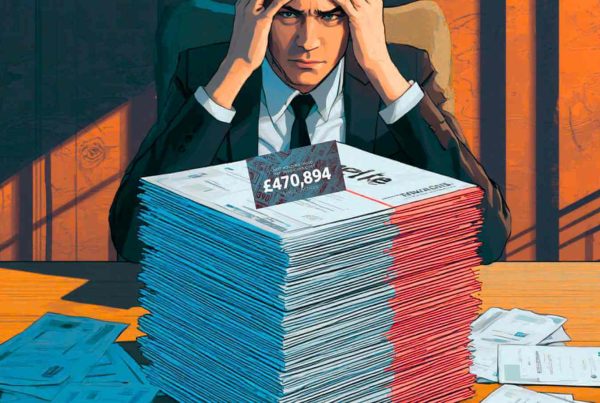
The First-tier Tribunal has dismissed a taxpayer's appeal against HMRC's refusal to allow £470,894 of input VAT, providing another important reminder that the right to recover VAT depends not only…

A recent Tax Tribunal case is a helpful reminder that getting tax advice over a pint with your mate down the pub might not be the best approach. In the…

Rodents eating taxpayer expense records was a feature deemed largely irrelevant by the Tax Tribunal in the case of Mukuna v Revenue and Customs UKFTT 1020 (TC). That is notwithstanding…