
Overview Of Insolvency Investigations Hampered By A Lack Of Funds
Insolvency investigations can be hampered by a lack of funds. What are the consequences for creditors?
There are many insolvency cases where recovery of funds depends on investigations. Examples of such cases will be those where Directors have engaged in transactions to defeat creditors or distanced the assets out of reach. In those cases the assets have in effect been replaced with ‘claims’ and it is the discovery of those claims (often against the Directors for misconduct such as misfeasance) on which a positive outcome for creditors depends. If investigations are restricted then it is axiomatic realisation of such claims can be adversely affected. Given most insolvent companies are by definition not flushed with cash, provision for funding investigations appears warranted.
To put matters in simplest form, imagine a company with £1 million in its bank account and a week before Liquidation the Director moved that sum out of the company’s bank account and put it into their own bank account. In the case of an insolvent Liquidation arising it is probable such a maneouvre by the Director in hoovering up the company’s funds would not be considered to have been in good faith and unlikely to survive the Director proper purpose test. It is probable the transaction would have been improper. However, the money is no longer within the control of the company. Whilst it has lost the ‘asset’, being liquid funds in its bank account, nevertheless, the quantum of the company’s property has not changed; only its form has. Instead of cash at bank, the company now has a breach of duty claim against the Director that would need to be investigated by a Liquidator. If an investigation is hampered by an absence of funds then such rogue transactions may risk going undetected and thereby creditors could lose out.
Statement of Insolvency Practice Number 2 (“SIP 2”) says in each and every case a Liquidator has to do investigation work and that it should be proportionate to the facts of the case.
Catch 22 Issue
Unfortunately, the reality is that sometimes you need complete information in order to properly investigate matters. Incomplete information can be as unhelpful as no information. In Clark v Cutland [2003] EWCA Civ 810 the Court of Appeal said:
As Brandeis J (a justice of the US Supreme Court) said extrajudicially, “sunlight can be the best of disinfectants”. Meaningless disclosure does not perform these functions and inadequate disclosure is often little better than no disclosure at all.
The insolvency regime is underpinned by an Ethical Code rooted in concepts such as independence. Can I liquidate my company myself? No you cannot. Why not? Because you cannot review your own homework. Pupils do not mark their own exam scripts; company Directors unsurprisingly cannot investigate themselves before reporting on their own conduct to the Director Conduct Reporting Service in a Liquidation. That has to be done by the Liquidator or Administrator in the case of Administration.
The risk is the system could be open to abuse by Directors who strip a company of its assets leaving a shell to be liquidated. The block on this may currently depend perhaps on the goodwill of Insolvency Practitioners who go beyond the call of duty and investigate more fully than regulations and legislation require, even when funds are insufficient.
Liquidator Discretion
Whilst Liquidator duties ensure a certain amount of investigation work is to be undertaken that may only go so far. A Liquidator has a good deal of discretion as to how much investigation work they do once basic enquiries required by legislation and SIP 2 have been undertaken. Once that mandatory work has been done, reported on to creditors and the Insolvency Service, if there is no funding available either from the company’s assets or creditors then a Liquidator is generally not obliged to dig a great deal deeper.
The absence of funding, therefore, introduces commercial considerations into the investigation part of the process. In such regard, the Court will generally not interfere with the commercial decisions of a Liquidator except if a decision taken is one that no reasonable Insolvency Practitioner would have taken.
Funding Creditors Voluntary Liquidation Investigations
The majority of Liquidations in the UK are those known as Creditors Voluntary Liquidations. That means that companies go into Liquidation when initiated by the business owners and the process is supported by creditors.
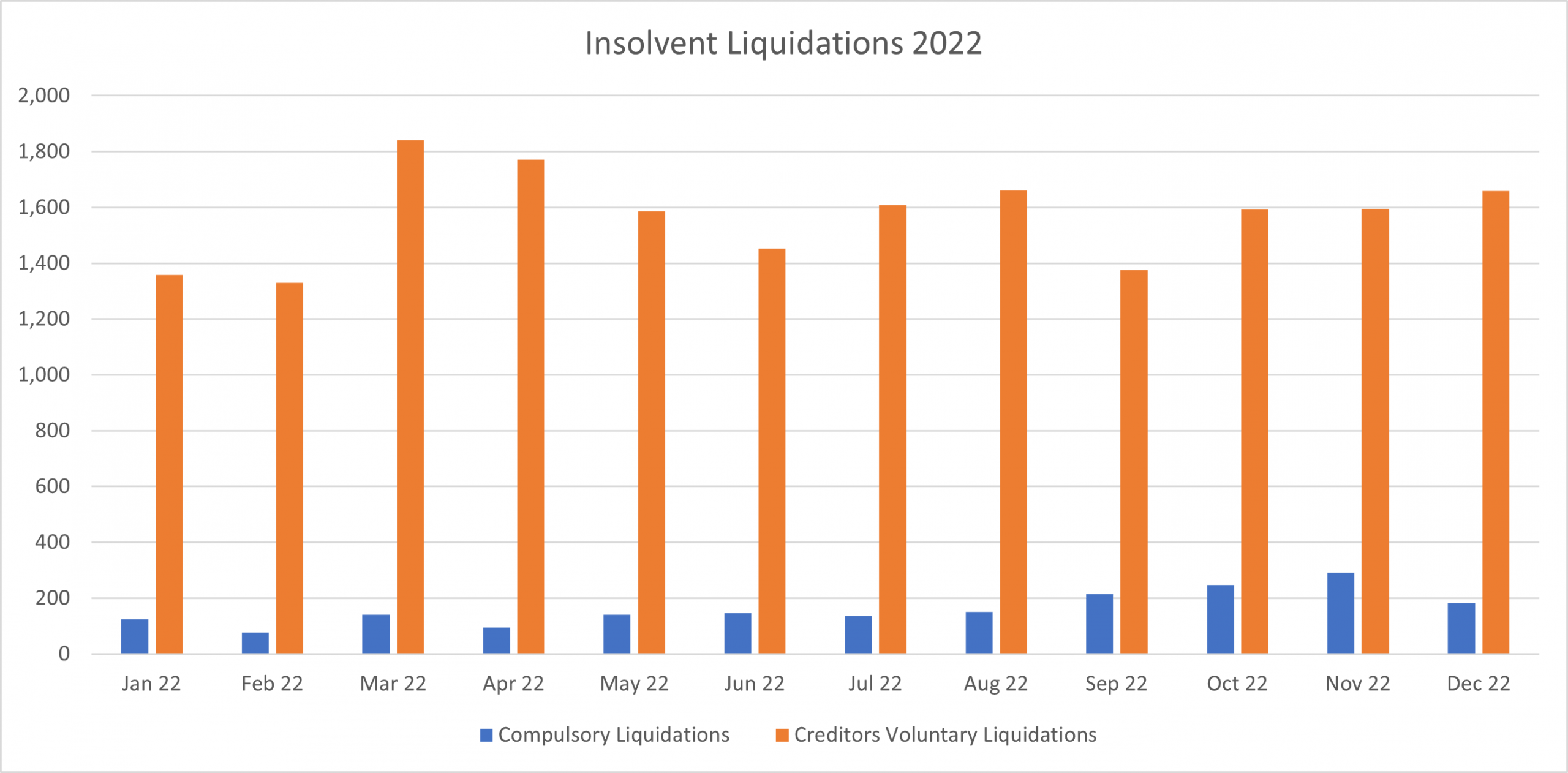
Creditor Voluntary Liquidations outstripped Compulsory Liquidations on average by more than ten times in 2022.
This is unsurprising. Whilst you can look to wind up a company if you are owed £750 or more, it is expensive to issue a Winding Up Petition to put a company into Compulsory Liquidation. If you want to wind up a company that owes you money it currently costs a minimum of £3,000 in disbursements before you have started paying your solicitors. There is a Court fee of £302 and the costs of the Insolvency Service known as the Official Receiver’s deposit, of £2,600.
Given these costs acting as a potential disincentive, Creditors Voluntary Liquidations are likely to be the dominant insolvent Liquidation procedure for most companies for the foreseeable future. As a result consideration of the funding for the investigations appears warranted.
If a company goes into Compulsory Liquidation then the Official Receiver will be paid a fee of £11,000 if there are sufficient realisations. If many instances that fee does not get paid due to an absence of recoveries. However, notwithstanding that, if the Government records or provides a fee of £11,000 for the Official Receiver then should it not fund the private sector to a similar sum or make a financial contribution to some of the investigations?
Oliver Elliot Observation
Common sense dictates that rogue Directors cannot investigate themselves; it has to be done by an independent and impartial Liquidator/Administrator. However, if the structure of the insolvency regime does not provide for such investigations to be properly funded then it will conceivably have an inherent weakness.
When the HMRC Crown preference returned there was perhaps an opportunity to plug this funding gap. It was not taken up but if the Director Disqualification Compensation Order is not being widely used by the Insolvency Service then should provision be made for part of the crown preference to fund an Insolvency Practitioner’s investigations?
Are you a UK company Director?
If you are a Director of an insolvent company or a bankruptcy, Oliver Elliot can help you. We Know Insolvency Inside Out.

Share This Page!
What Next?
Expert Advice Is Just A Click Away
If you have any questions in relation to Insolvency Investigations Can Be Hampered By Lack Of Funds then contact us as soon as possible for advice. Oliver Elliot offers a fresh approach to insolvency and the liquidation of a company by offering specialist advice and services across a wide range of insolvency procedures.
Our expertise is at your fingertips.
Disclaimer: Insolvency Investigations Can Be Hampered By Lack Of Funds
This page is not legal advice and should not be relied upon as such. This article Insolvency Investigations Can Be Hampered By Lack Of Funds is provided for information purposes only. You can contact us on the specific facts of your case to obtain relevant advice via a Free Initial Consultation.
Recent Posts / View All Posts