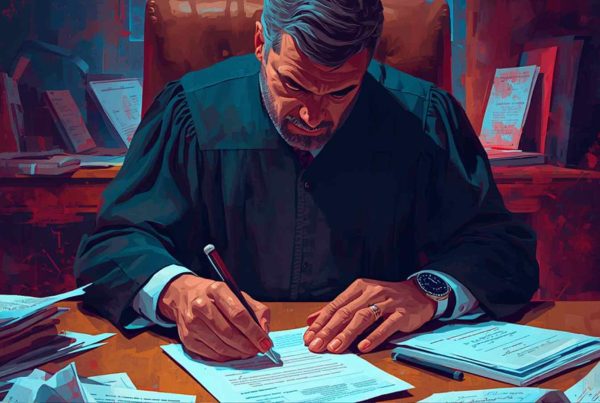
Overview Of A Just And Equitable Winding-Up Petition

A just and equitable Winding Up Petition is one that enables shareholders to petition the Court for assistance to resolve various shareholder disputes.

In most cases, a Winding Up Petition will arise from unpaid debts. Just and equitable petitions are rare in comparison.

Shareholder disputes arise for various reasons such as allegations of breach of duty for example only. There has to be a mechanism in place that enables some form of resolution and finality. This is where just and equitable Winding Up Petitions can be deployed.

What Is A Just And Equitable Winding Up Petition

The Law For Just And Equitable Winding Up Petitions

The applicable law can be found in Section 122(1)(g) of the Insolvency Act 1986 and Section 994 of the Companies Act 2006.

A disintegration of relations among shareholders in owner-managed businesses can be resolved by winding up the company on the just and equitable grounds. The Court petitioned will have to be satisfied that it is both just and equitable for this to happen. For example only, if there is a trading business that is profitable and not insolvent the Court might be reluctant to wind up the company when other options might be available such as ordering the party seeking to wind up the company to sell its shares to another shareholder that wishes to continue trading.

Grounds For A Just And Equitable Winding Up Petition

The grounds for a just and equitable Winding Up Petition are very varied but it most commonly will arise when there is a shareholder dispute that stops the company from operating normally. Shareholder disputes can be hugely disruptive and detrimental to company governance.

A dispute does not have to arise due to allegations or concerns over financial wrongdoing but it can be as simple as disagreements over the company’s future path and policies.

There will therefore need to be a mechanism to enable the company deadlock to be resolved so the shareholders can move forward.

The Court however retains a discretion however and it will look at all the facts before rushing to judgment. If there is another route to resolving the shareholder dispute it is likely absent serious allegations of misconduct and mismanagement to exercise restraint before rushing to grant a just and equitable Winding Up Petition.

Who Can Present A Just And Equitable Winding Up Petition?

Directors, Shareholders or a person who is liable to contribute to a company’s assets in the event of its being wound up can petition to wind up a company on just and equitable grounds.

In the case of shareholders, they must have been registered for at least 6 months during the 18 months before the commencement of the winding up.

Could A Minority Shareholder Wind Up a Company?

If a minority shareholder has had their interests prejudiced for example by being disenfranchised from the company with their rights disregarded then they could look to issue a just and equitable Winding Up Petition to address such an issue.


GET IN TOUCH FOR HELP

For a free no obligation chat about any of the matters detailed above, please do get in touch for help. An expert will call you back or if you prefer exchange emails.

We can explore your situation and consider the best way to help you and your business needs. You can call us 020 3925 3613 or fill in the form below and will get back to you quickly. We Know Insolvency Inside Out.

Author: Elliot Green
Last Updated: August 17, 2026

contact-us-and-get-called-back-red1.png

Name

100% Confidential Advice
We Know Insolvency Inside Out

Share This Page!

What Next?

Expert Advice Is Just A Click Away

If you have any questions in relation to What Is A Just And Equitable Winding Up Petition? then contact us as soon as possible for advice. Oliver Elliot offers a fresh approach to insolvency and the liquidation of a company by offering specialist advice and services across a wide range of insolvency procedures.

Our expertise is at your fingertips.

Name

By submitting this form you agree with the storage and handling of your data by Oliver Elliot. For more details, please read our Privacy Policy.

Opt in

Disclaimer: What Is A Just And Equitable Winding Up Petition?

This page What Is A Just And Equitable Winding Up Petition? is not legal advice and should not be relied upon as such. This article is provided for information purposes only. You can contact us on the specific facts of your case to obtain relevant advice via a Free Initial Consultation.

Recent Posts / View All Posts

Write Off The Loan, Write In The Taxman

Write Off The Loan, Write In The Taxman 

| Director Transactions, HMRC, Liquidation | No Comments
There are occasions when tax law achieves something seemingly rather remarkable: it manages to be perfectly logical and yet may arguably produce some inconsistency at the same time. The recent…
Insolvency Practitioner Fees: When Nobody Can Mark the Homework The Judge Will Insolvency Practitioner Fees When Nobody Can Mark the Homework The Judge Will

Insolvency Practitioner Fees: When Nobody Can Mark the Homework The Judge Will

| Liquidation | No Comments
The recent Float Capital Ltd, In the Matter Of EWHC 1891 (Ch) judgment is not simply another decision about insolvency practitioners' remuneration. It is a reminder that where the normal commercial…
Liquidator’s Assignment Of Claims Challenged On The Basis Of Validity Of Appointment

Liquidator’s Assignment Challenged On The Basis Of Validity Of Appointment

| Liquidation | No Comments
The case of Henderson & Jones Ltd v Chambers & Anor (Re Priors Group Ltd) EWHC 1152 (Ch) involved dismissal of a summary judgment application issued by the applicant who…
Liquidator’s Claim Defeated By Disclosure Difficulty

Liquidator’s Claim Defeated By Disclosure Difficulty

| Liquidation | No Comments
Disclosure is an important part of litigation. At its core, it serves to function as a means of furthering attempts at a fair trial. The consequences of inadequate disclosure can…