
Cease Trading A Limited Company Overview
You should cease trading a Limited company if to continue doing so would cause an increased loss to creditors and insolvent Liquidation appears inevitable.

You should cease trading a Limited company if to continue doing so would cause an increased loss to creditors and insolvent Liquidation appears inevitable.

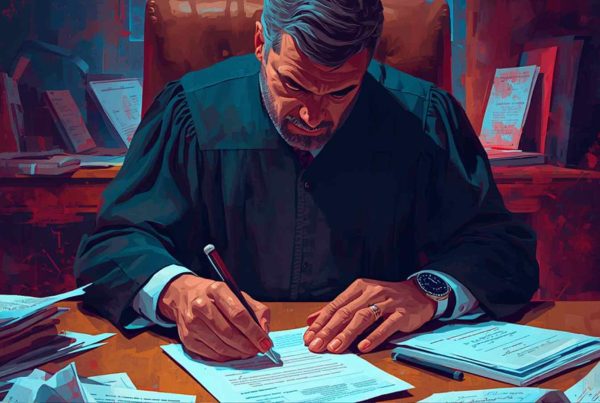
You should cease trading a Limited company if you do not have the skills to run a business with particular problems. If that is the case then the legal and commercial reality is that you should not be doing it. It is as simple as that as His Honour Judge Paul Matthews said in the matter of Official Receiver v Arron [2021] EWHC 1587 (Ch).
In that case, the Judge was considering disqualification proceedings brought against a company Director involving a construction company and had this to say:
If you choose to trade in the construction business, you must take the business as you find it, with all its problems, including those inherent in the operation of the CIS scheme. These include getting the paperwork in order. If you have not the skills to run a business with such problems, then the legal and commercial reality is that you should not be doing it.
If you trade whilst insolvent, knowing you are insolvent and you cause a further loss to creditors then there is a real as opposed to remote risk that in doing so you are risking being accused of Wrongful Trading.
Wrongful trading is insolvent trading when there appears no reasonable prospect of avoiding insolvent Liquidation.
Insolvent Liquidation is either a Creditors Voluntary Liquidation or a Compulsory Liquidation.
In order to avoid causing a cashflow crisis to develop you should plan your trading activities and prepare a budget so that you can foresee if such a crisis will develop.
One way to determine when you should cease trading a Limited company is to see if your budgeted forecast highlights a cashflow crisis and then plan to avoid the same.
There are ways that you might be able to avoid such a cashflow crisis from forcing you to cease trading:
If however these options do not work and nothing else appears possible then you may have to seriously consider ceasing to trade the company.
In the matter of Mid Cornwall Metals Limited, the failure by the Director to cease trading the Limited Company meant that liabilities to HMRC mounted up such that he caused or permitted the company to trade to the detriment of HMRC.
The Director explained the difficulties he encountered as follows and suggested that not all of the HMRC liabilities were due and owing – the Judge was not impressed:
The defendant puts the blame for MCM’s failure on a combination of matters, including (i) the requirement by trade suppliers to be paid up front, (ii) the failure by customers (some of whom went into insolvent liquidation) to provide all the payment certificates that they should have done, or to supply ones that were accurate, and (iii) the law fixing legal liability for PAYE and VAT on figures put into returns, whatever the economic reality of the situation. I am not impressed by any of this. The first and third of these were, unhappily for MCM, the conditions of doing business at all. The first was a function of the market, aggravated by the previous insolvencies that the defendant had been involved in, and the third was simply what the law required. The second was a problem (explained in some detail in the defendant’s two affidavits) which the company and its director had to grapple with in this sector of the market, but regrettably did not master. Yet all MCM’s competitors in this sector would have had to deal with the same problem…
…
I asked the defendant at the hearing whether, if the company had been better capitalised, so that it would have been better able to overcome cashflow problems, for example those caused by the CIS scheme, it would have survived. He answered Yes. To my mind, this underlines the point. If you are having cashflow problems because you incur liabilities to HMRC before you get the cash (or credits) to discharge them, you should either solve the cashflow problem by having systems in place that ensure you can secure the necessary offset against liability as it is incurred, or you should provide the extra capital needed to bridge the cashflow gap. The defendant did neither, and carried on trading. In my judgment, this was a serious management failure…
…
In my judgment, it is simply not enough to say, for example, that the company had no choice but to do this if it was to carry on business. The company – and its sole director – always had the choice of ceasing to trade. But the defendant did not make that decision until it was far too late. Nor is it enough to say that HMRC was not discriminated against deliberately.
For a free no obligation chat about any of the matters detailed above, please do get in touch for help. An expert will call you back or if you prefer exchange emails.
We can explore your situation and consider the best way to help you and your business needs. You can call us 020 3925 3613 or fill in the form below and will get back to you quickly. We Know Insolvency Inside Out.

Author: Elliot Green
Last Updated: October 18, 2026
If you have any questions in relation to When Should You Cease Trading A Limited Company? then contact us as soon as possible for advice. Oliver Elliot offers a fresh approach to insolvency and the liquidation of a company by offering specialist advice and services across a wide range of insolvency procedures.
This page is not legal advice and is not to be relied upon as such. This article When Should You Cease Trading A Limited Company? is provided for information purposes only. You should take independent advice on the facts of your case. No liability is accepted for reliance upon this post.



Oliver Elliot is a specialist firm set up by Elliot Green, who is a Licensed Insolvency Practitioner and Chartered Accountant. We know insolvency inside out. We offer a vast variety of services and can accommodate you no matter what industry you are in and what insolvency services you require. Where there’s Oliver Elliot there’s a way.



© 2026 Oliver Elliot. All Rights Reserved. Registered in England and Wales. Company Number: 11746967
