
Summary Of Can A Bankrupt Reduce The Fees Of The Trustee
Perhaps one of the more melancholy questions arising in bankruptcy is Can A Bankrupt Reduce The Fees Of The Trustee In Bankruptcy?. The answer is yes they can but this is not an ‘open sesame’ door.
It is however a rare event a bankrupt can successfully apply to get permission to reduce a Trustee’s fees because of the need to reduce them to such a level that there is a surplus sufficient to return monies to the bankrupt themselves.
The question that might well be asked is what is the point if the bankrupt will not stand to benefit. A fee challenge will generate satellite litigation which means trips to the UK courts operated by HM Courts and Tribunal Service, more costs and the finality of the bankruptcy potentially deferred for many months or even possibly even years.
Such an application may arise if a bankrupt wants to improve the returns to creditors or perhaps considers the scale of the Trustee’s fees to be eye-watering. However, this is often a hopeless basis to embark upon a permission application to reduce the fees of the Trustee in Bankruptcy. The question a bankrupt perhaps should ask is ‘what’s in it for me?’. If the court can see no benefit for the bankrupt then the door to permission is likely simply to be closed to the bankrupt.
To lower a Trustee in Bankruptcy’s fees the starting point is the need to show the assets exceed the level of creditors. In such an event the Trustee will need to provide sufficient information as to the level of their fees and not seek to rely upon bare assertion alone, otherwise permission to challenge fees may well be granted by the court.

Statutory Right Of A Bankrupt To Seek To Reduce The Trustee’s Fees
There is a provision in Rule 18.35 of the Insolvency (England and Wales) Rules 2016 which says with the court’s PERMISSION a bankrupt can attempt to reduce the Trustee’s fees and expenses.
There are restrictions. Such a challenge cannot be made more than 8 weeks after the Trustee’s final report has been issued under Rule 10.87 of the Insolvency (England and Wales) Rules 2006.
In effect, an application can only be brought if the bankrupt has a residual interest in the assets and stands a good chance of getting something out at the end of the process. Rule 18.35(4) means the court does not have the power to grant the application without a likelihood of:
…a surplus of assets to which the bankrupt would be entitled
If the court agrees with the bankrupt then given Rule 18.36 of the Insolvency (England and Wales) Rules 2016 it can make orders with the following effects:
- Reduce the Trustee’s fees
- Change the fee basis of the Trustee
- Remove some or even all of the fees and expenses as an expense of the estate
- Any other order the court thinks fit
Why Permission Is Required For A Bankrupt To Attempt To Reduce Fee Level
It is not unknown for a bankrupt to have a challenging relationship with their Trustee. One person has the responsibility for realising the assets of the other. Leaving aside the strict and mandatory characteristics of the professional conduct required from the Trustee, it is a situation that is likely to test relations between parties. If you go through the reported cases in the Chancery Division you can see the number of disputes between a Trustee and a bankrupt.
A bankrupt’s fee reduction application is not intended to be some red carpet opportunity for a bankrupt to ventilate their sense of outrage as to how their assets have been carved up in bankruptcy.
That is a matter for creditors to decide, not usually the bankrupt. Creditors have approved the fees otherwise the Trustee would have to go to the court for approval. It is therefore creditors (if anyone) who typically can look to apply to court to reduce them.
Standing Of The Bankrupt And Residual Interest
Ultimately it will come down to matters of in effect standing. In other words does the bankrupt have any real interest in the outcome of such proceedings? That means matters will depend upon whether they have a residual interest in the assets.
However, the problem with this is once the bankrupt has lost their interest and control over the assets and property within the bankruptcy estate, which is EXACTLY the effect of bankruptcy’s vesting provision under Section 306 of the Insolvency Act 1986, then he or she will usually not have any interest in the outcome of any (even) successful application to reduce the fees of the Trustee in Bankruptcy.
Singh v Hicken
To give this topic some real (as opposed to remote) reference, join me on a brief flight exploring the landscape left by Singh v Hicken [2018] EWHC 3277 (Ch). Pack lightly as this journey is for speedy boarding, zooming over the key landmarks and leading to an easy evacuation.

It started as a small bankruptcy case in terms of debts that then mushroomed. At the start of bankruptcy on 21 September 2009, the debts were £16,622.
So let’s now fly forward 9 years when the matter of the application to query the Trustees’ fees hit the appeal court and the amount required to discharge costs and debts soared to £285,089.
The Trustees’ fees were a bit more than £75,000 and solicitors’ fees (acting for the Trustees) of £90,000. A little rudimentary arithmetic and by the time you add on the VAT that gets you to around the £200,000 mark before considering creditors and other costs. The bankrupt’s assets were largely confined to three properties of which two had equity amounting to a combined total of around £140,000.
The battleground that seems to have led to increased Trustee’s fees involved the common theme that can set the costs hare about running ie. litigating the beneficial interest in property and here more than one failed annulment application.
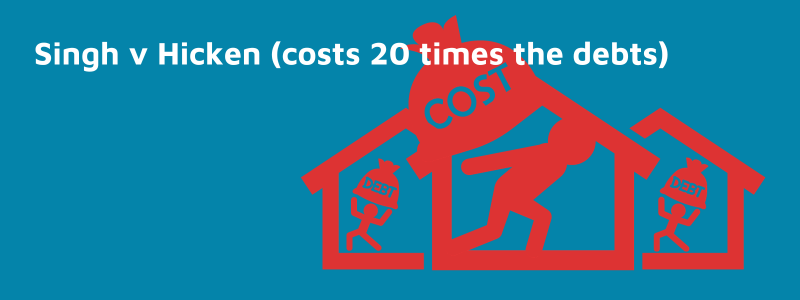
It was the Trustee’s evidence that he had to deal with several court applications issued by the bankrupt that were unsuccessful. It was not an option open to the Trustee not to deal with them. As a result, it seems costs escalated to something like 20 times the value of the bankruptcy debts and it appears according to the Trustee, this was at least in part referrable to the conduct of the bankrupt.
Threshold Question
The court noted it was a precondition for a successful application by a bankrupt to attempt to reduce the level of fees and expenses that there must be a surplus, otherwise, the challenge simply does not get off the ground.
It seems the rationale for this must be if there is no residual interest then such an application will only have the potential power to shift the distribution of the assets in the estate between the Trustee and creditors. The purpose of Rule 18.35 is not to afford the bankrupt the right to litigate a fee challenge for creditors.
Court Discretion
If the bankrupt can satisfy the threshold question then the next thing is for the court to consider if the application should be granted. The court has a wide discretion as Rule 18.35 refers to the “generality of the matters which the court may take into account”.
In this case, the Trustee, Mr Hicken, did provide evidence explaining the substantial costs.
In Hicken v Singh, the bankrupt’s appeal was unsuccessful as the appellate court could find no fault with the approach taken by the first court that heard the matter.
Oliver Elliot Comment

The writer has experienced bankruptcy cases of some similarity to Hicken v Singh in which although hindsight might be a wonderful thing, the costs of bankruptcy could have been avoided had the relevant parties ceased their litigation disputes and settled their debts which would have resulted in some residual assets for the relevant bankrupt individuals.
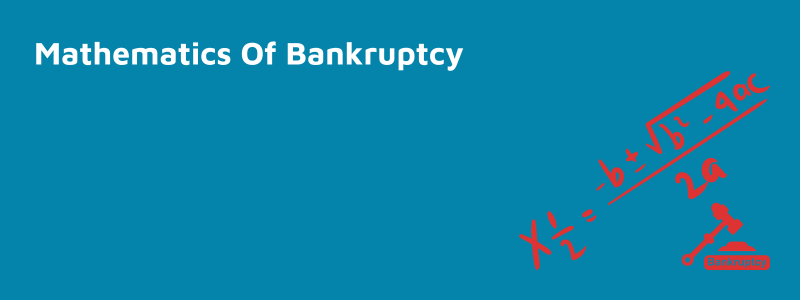
It is reasonably foreseeable that bankruptcy should ideally be avoided in cases of surplus assets because the costs of litigated disputes can so easily start to hoover up any surplus position. This is the mathematics of bankruptcy.
The writer considers two observations that arise concerning litigation that seem to hold:
- There is a risk with any piece of litigation; and
- The result in litigation is often not about the determination of right from wrong but more usually on what can be proven.
As a result, whilst a bankrupt can look to reduce the fees of their Trustee it is a decision that perhaps warrants taking independent professional advice and not one conceivably embarked upon with an excess of alacrity otherwise a bankrupt could risk disembarking from bankruptcy proceedings without a surplus they might otherwise have received.
For a free no obligation chat about any of the matters detailed above, please do get in touch for help. An expert will call you back or if you prefer exchange emails.
We can explore your situation and consider the best way to help you and your business needs. You can call us 020 3925 3613 or fill in the form below and will get back to you quickly. We Know Insolvency Inside Out.


What Next?
Expert Advice Is Just A Click Away
If you have any questions in relation to Can A Bankrupt Reduce The Fees Of The Trustee? then contact us as soon as possible for advice. Oliver Elliot offers a fresh approach to insolvency and the liquidation of a company by offering specialist advice and services across a wide range of insolvency procedures.
Our expertise is at your fingertips.
Disclaimer: Can A Bankrupt Reduce The Fees Of The Trustee?
This page is not legal advice and is not to be relied upon as such. This article Can A Bankrupt Reduce The Fees Of The Trustee? is provided for information purposes only. You should take independent advice on the facts of your case. No liability is accepted for reliance upon this post.
Recent Posts / View All Posts