This is a complete guide to what records must a company keep.
In this guide you’ll learn:
- Why must a company keep records?
- What accounting records must a Director create?
- What are a company’s statutory books?
- What documents must be kept for corporation tax?
- What documents must be kept for VAT?
- What documents must be kept for PAYE?
- What records must a company keep for meetings and resolutions?
Company records a Director must keep is an important matter for any company officer. This guide covers the following information about keeping company books and accounting records.
Why Must A Company Keep Records?
Keeping company and accounting records is not an optional requirement of a company Director. It is a mandatory requirement under Section 386 of the Companies Act 2006.
The legislation says:
Every company must keep adequate accounting records.
Why Is It In A Director’s Interest To Keep Company And Accounting Records?
The reason that it is in your interest to keep proper records is it helps you demonstrate the purpose behind transactions and why you entered into them.
How Long Must A Company Keep Records?
It is a requirement that a Director must keep company and accounting records for at least three years from when they are created for a private limited company and six years for a public limited company. This is set out in Section 388 of the Companies Act 2006.
What Records Must A Director Keep?
The records a Director must keep are quite wide-ranging. It is very important that the records kept by a company are those that support the transactions that it entered into. Furthermore, given that there will be a tax consequence from such transactions, the records must explain and justify those figures and calculations that appear in its tax returns.
A company’s tax returns are presumed to be submitted on the basis of what is called Self Assessment ie. the company assesses and reports to HM Revenue and Customs on the amount of tax that it owes. If HM Revenue and Customs disagree or if a company fails to self-assess its own tax position HM Revenue and Customs will raise assessments. You therefore must keep records so that your compliance with tax legislation is met by ensuring that you file up to date and accurate tax returns when you are duly obligated to do so.
Accounting Records That Must Be Kept By A Company Director
A Director must keep both company records and accounting records. The two may be similar but accounting records are a type of company record that you must keep as a Director of a company. However, accounting records are not the only type of record that you must keep. Accounting records typically are associated with a class of record that must be kept relating to the accounting matters concerning a company and its trade and transactions.
However, in order for a company to trade it can and will typically create other types of records that are not accounting records. Such records that are not accounting records will be records for example that affect a company’s trading activities. An example of such a record is personnel records and employment contracts. These are not accounting records in the ordinary sense but they are crucial records that a company needs to keep.
Company And Accounting Records A Director Must Keep
- ‘records’ and ‘supporting documents’ within the meaning of Paragraph 21 of Schedule 18 of the Finance Act 1998
- records relating to Schedule 11 Paragraph 6 of the Value Added Tax Act 1994
- records relating to Regulation 97 of The Income Tax (Pay As You Earn) Regulations 2003
- records relating to Part 13 Chapter 6 of the CA 2006 concerning resolutions and meetings of the Company
- correspondence, statutory, tax and payroll
What Are A Company’s Statutory Books?
A Director must ensure that a company retains records relating to the company’s constitution, structure and history. Such company records will include:
- Register of Members which are details of the owners of the Company
- Register of Directors which contains details of the Company’s Directors
- Register of Secretaries which contains details of the Company’s Secretaries
- Register of Debenture-Holders which contains details of the Company’s Debenture Holders
- Register of People with Significant Control being those who have been or are in control of the Company
- Register of Interests Disclosed being a register of interests in shares of the Company
- Register of Company Charges which discloses details of all of the Company’s charges
What Records Are Needed For Corporation Tax?
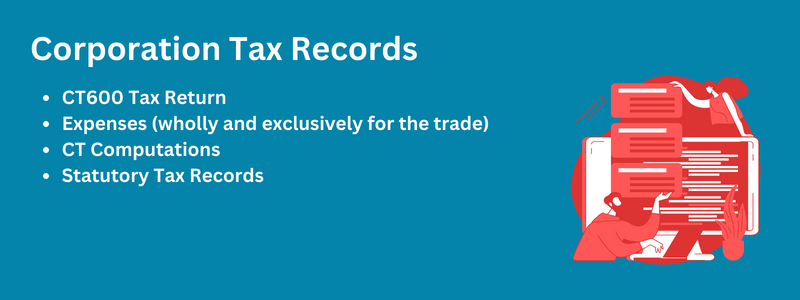
The records required for corporation tax are an extension of the accounting records that you are required to create, maintain and retain.
Records Required For Corporation Tax
Records required for corporation tax are those that enable you to justify and evidence the figures that you submit in your corporation tax returns. The legislation in Paragraph 21 of Schedule 18 of the Finance Act 1998 provides in general terms that you are required to keep all receipts and expenses that evidence the company’s activities and the matters that evidence what gave rise to those expenses and receipts.
Such company records may include includes accounts, books, deeds, contracts, vouchers and receipts.
What Records Are Needed For VAT?
The records required for VAT are an extension of the accounting records that you are required to create, maintain and retain if you need to register for VAT. You must register for VAT if your company turnover exceeds £85,000 for a 12 month period or if you know it will exceed that sum.
Records Required For VAT
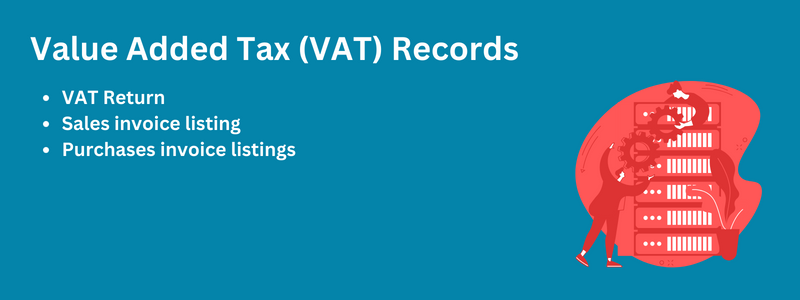
Records required for VAT are those that enable you to justify and evidence the figures that you submit in your VAT returns. In addition Regulation 31 of the Value Added Tax Regulations 1995 requires a company to retain the following types of company records:
- the VAT account
- VAT invoices for all purchases and sales
- credit notes
- debit notes
- all documents relating to imports and exports
What Records Are Needed For PAYE?
The records required for PAYE are an extension of the accounting records that you are required to create, maintain and retain if you employ people.
Records Required For PAYE
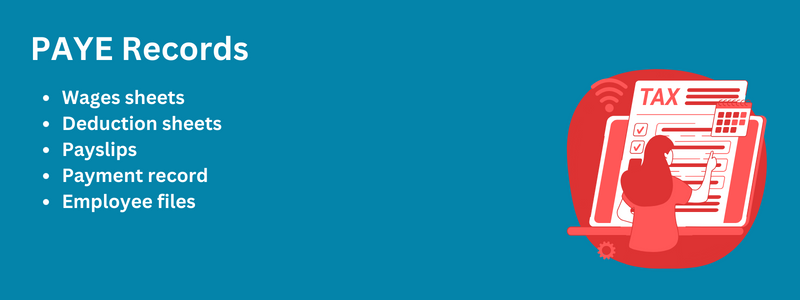
Records required for PAYE are those that enable you to justify and evidence the figures that you submit in the returns that you make each month for PAYE purposes. In addition Regulation 97 of The Income Tax (Pay As You Earn) Regulations 2003 requires a company to retain the following types of records:
- wage sheets
- deduction sheets
- payments to employees
- tax deductions in respect of the payments to employees
- documents and information in respect of employee benefits in kind
What Records Are Needed For Meetings And Resolutions?
The records required for Meetings and Resolutions are those records that record the meetings of a company and the resolutions passed at those meetings of a company. This is set out in Chapter 6 of the Companies Act 2006.
Register Of Members
In order to pass resolutions you need a company to have members and to identify these persons you need to keep the Register of Members. Under Section 113 of the Companies Act 2006, all companies must have a register of members with details of the names, addresses, appointment dates, cessation dates and shareholding (number and class), total paid (or to be paid) on each share, date registered (added to the register of members).
Records Required For Meetings
Records required for Meetings are those that enable you to evidence meetings and resolutions as follows for 10 years from the date of the resolution or meeting:
- resolutions passed
- minutes of the meetings
Records Needed For Resolutions
The Company records that need to be kept for resolutions are:
- record of resolution passed signed by a director of a company or a company secretary
- minutes of the meetings signed by the chairman of the meeting
- in the case of a sole member then other than written resolutions the member must provide to a company details of their decisions when in effect taken at a general meeting of the company
More information on the register of members of a company can be found on our page Register Of Members Of A Company – Role In Passing Resolutions And A Winding Up?.
What Accounting Records Must A Director Create?
You must ensure that you keep records relating to the Company’s affairs, dealings and property. Such records will include:
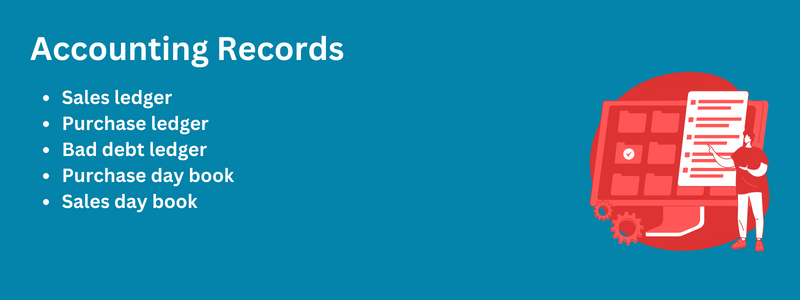
- Record or ledger of all monies received and payments made commonly known as a Cashbook
- Record or ledger of sales invoices commonly known as a sales day book
- Record or ledger of purchase invoices commonly known as a purchases day book
- Record or ledger of all customer balances listing outstanding invoices and receipts received commonly referred to as a sales ledger
- Record or ledger of all supplier balances listing outstanding invoices and payments made commonly referred to as a purchase ledger
- Other records or ledgers are required depending upon the nature of a company’s dealings