
How To Restore A Dissolved Company
There are two ways to restore a dissolved company:
- restoration by court order
- administrative restoration

There are two ways to restore a dissolved company:

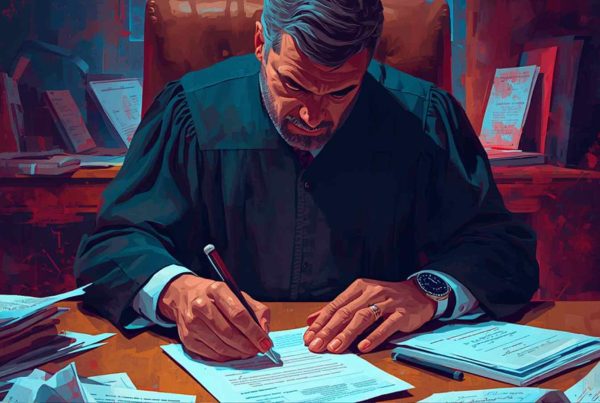
The registrar can restore a company if he receives a court order. Anyone who intends to make an application to the court to restore a company is advised to obtain independent legal advice.
If the company was struck off by voluntary dissolution (Section 1003 of the Companies Act 2006) the company can only be restored by court order.
Any company which is restored to the register is deemed to have continued in existence as if it had not been struck off and dissolved.
Generally, any of the following can make an application for restoration:
As a general rule restoration by court order can be applied for up to six years from the date of dissolution, if the dissolution date is on or after 1 October 2009.
There are no time limits for personal injury claims.
Companies dissolved on or before 30 September 2007 following any form of liquidation are out of time to restore the company.
Companies dissolved on or after 1 October 2007 following any form of liquidation have six years from the date of dissolution.
There are no time limits for personal injury claims.
If you are restoring a company that was registered in England or Wales, you must apply to the Court by completing a Part 8 claim form (N208) (this is the standard form that starts proceedings), which is available in the Court Service website. The registrar of the Companies Court in London usually hears restoration cases in chambers once a week on Friday afternoons.
Cases are also heard at the district registries. Jurisdiction of district registries can be found on the Court Service website. Alternatively, you can make an application to a County Court that has the authority to wind up the company. See the ‘Government Legal Department Guide to Company Restoration’ or telephone 020 7210 3000.
You must give the registrar at least 10 days notice of the hearing to allow him time to deal with the matter and instruct the Solicitor representing him.
If you are restoring a company that was registered in Scotland, you must apply to the Court of Session. Alternatively, for a company whose paid-up capital does not exceed £120,000, you can apply to the Sheriff Court in the sheriffdom in which the company has its registered office.
You can find information and locations of Sheriff Courts at the Scottish Courts and Tribunals website. You must serve the petition to restore on the registrar of companies in Scotland and any other bodies directed by the court. There is no witness statement required and the period required for responses is set by the Court and only commences when the petition is served on the registrar.
If you are restoring a company that was registered in Northern Ireland, you should serve the originating summons on both of the following:
The Registrar of Companies
Companies House
Second Floor
The Linenhall
32 – 38 Linenhall Street
Belfast
BT2 8BG
or
DX 481 N.R. Belfast 1
Royal Courts of Justice
Chichester Street
Belfast
BT1 3JY
The registrar will also require a copy of the witness statement in support of the application.
You should serve the claim form, witness statement/affidavit and supporting evidence (for example, the incorporation certificate) on the appropriate registrar of companies and the solicitor dealing with any ‘bona vacantia’ assets.
The relevant details of the registrars are as follows:
Registrar of Companies (England and Wales)
Companies House
Crown Way
Cardiff
CF14 3UZ
DX 33050 Cardiff
Emailenquiries@companieshouse.gov.uk
Enquiries (UK)0303 1234 500 (Monday to Friday, 8:30am to 6pm, except holidays)
Public access is restricted. Our Cardiff office is accepting deliveries 24 hours a day.
Registrar of Companies (Scotland)
Companies House
4th Floor
Edinburgh Quay 2
139 Fountainbridge
Edinburgh
EH3 9FF
DX ED235 Edinburgh 1
Emailenquiries@companieshouse.gov.uk
Enquiries (UK)0303 1234 500 (Monday to Friday, 8:30am to 6pm, except holidays)
Public access is restricted. You can deliver any paper documents to the Companies House external letterbox next to the office building.
We’re still accepting deliveries from Royal Mail and DX post.
Registrar of Companies (Northern Ireland)
Companies House
2nd Floor
The Linenhall
32-38 Linenhall Street
Belfast
BT2 8BG
DX481 N.R. Belfast 1
Emailenquiries@companieshouse.gov.uk
Enquiries (UK)0303 1234 500 (Monday to Friday, 8:30am to 6pm, except holidays)
Public access is restricted. You can deliver any paper documents, in a sealed envelope, to the reception desk on the ground floor of The Linenhall (Monday to Friday, 10am to 4pm, except holidays).
Documents can be delivered by post and we suggest you use recorded delivery for safer delivery.
Companies House will also accept delivery by hand during our normal office hours at:
Other than in Scotland, the Court will require:
In England and Wales and in Northern Ireland the above information must be provided in an affidavit or witness statement. In Scotland this information can be provided in the petition to restore.
Further information about the requirements for England and Wales can be found in the ‘Government Legal Department Guide to Company Restoration’. If you require further information about restoration in Northern Ireland or Scotland please contact your solicitor.
The registrar will normally restore a company with the name it had before it was struck off and dissolved. If at the date of restoration the company’s former name is the same as another name on the registrar’s index of company names, he cannot restore the company with its former name. You can check company names online to see if a company’s name is the same as another on the register.
If the name is no longer available, the court order may state another name by which the company is to be restored. On restoration, we will issue a change of name certificate as if the company had changed its name.
Alternatively, the company may be restored to the register as if its registered company number is also its name. The company then has 14 days from the date of restoration to pass a resolution to change the name of the company. You must deliver a copy of the resolution and a notice of change of name by resolution of directors form NM05 to Companies House with the appropriate fee. Companies House will then issue a change of name certificate.
It is an offence if the company does not change its name within 14 days of being restored with the number as its name.
The change of name does not take effect until we have issued the certificate.
Where property has become bona vacantia, the Court may direct that the claimant meets costs of the Crown representative in dealing with the property during the period of dissolution or in connection with the proceedings. The Court may also direct that the claimant meets the registrar’s costs in connection with the proceedings for the restoration.
The company, once restored, must normally pay any statutory penalties for late filing of accounts delivered to the registrar outside the period allowed for filing. The penalties that may be due are:
The appropriate filing fee must also be paid on submission of outstanding documents (eg annual return fee).
The level of any late filing penalty depends on how late the accounts are when we receive them. For example, a set of accounts that you should have delivered 2 months before a private company was dissolved are normally regarded as 2 months late if you deliver them on restoration and you must pay the relevant penalty. You will not be required to pay late filing penalties of accounts which became due during the period the company was dissolved. Find out more about penalties in the late filing penalties guide.
The applicant must deliver a copy of the court order with the court seal to the registrar to restore the company. A company is restored when you deliver the order to the registrar. When restoring a company that was registered in Scotland, the registrar in Scotland will require a copy of the order certified by the court.
When a company has been restored to the register, the general effect is that a company is deemed to have continued in existence as if it had not been dissolved or struck off the register.
The Court may give directions or make provision to put the company and all other persons in the same position as they were before the company was dissolved and struck off.
A notice will also be placed in the relevant Gazette.
The act of restoring the company cancels bearer shares. If this means that the restored company’s share capital will be nil on restoration and the company is being restored by a former member or officer, that person will have to file an allotment of shares (using form SH01) within one month of the company being restored. Failure to do so is an offence.
The requirement to file the SH01 does not apply if the restoration is being undertaken by a third party.
Under certain conditions, where a company was dissolved because it appeared to be no longer carrying on business or in operation, a former director or member may apply to the registrar to have the company restored. This is called ‘administrative restoration’. If the registrar restores the company it is deemed to have continued in existence as if it had not been dissolved and struck off the register. Section 1025 of the Companies Act 2006 gives details of the requirements relating to administrative restoration.
You cannot apply for administrative restoration if the directors voluntarily applied to strike the company off the register.
Administrative Restoration is available where the company was struck off under either section 652 of the Companies Act 1985, the Companies (Northern Ireland) Order 1986 (SI 1986/1032 (NI 6) or section 1000 and section 1001 of the Companies Act 2006.
Only a former director or former member of the company, who was a director or member at the time the company was dissolved can apply.
To be eligible for administrative restoration, the company must have been:
If a company meets the above criteria, an application for restoration may be made if it meets the following conditions:
The ‘bona vacantia waiver letter’ must be obtained from the relevant Crown representative. A fee will be applicable.
The assets of a dissolved company pass to the Crown and are regarded as ‘bona vacantia’ (‘meaning ‘vacant goods’).
You must send an application for administrative restoration form RT01 to the registrar which includes a statement of compliance confirming that the applicant is legally entitled to make the application and that the conditions for administrative restoration are met.
The registrar’s fee for processing the application is £100. Please make cheques payable to ‘Companies House’ and write the company number on the reverse.
The applicant must meet the Crown representative’s costs or expenses (if demanded). The company must pay any statutory penalties for late filing of accounts delivered to the registrar outside the period allowed for filing.
The penalties that may be due are:
You must also pay the appropriate filing fee on submission of any outstanding documents.
The level of any late filing penalty depends on how late the accounts are when we receive them. In the case of accounts delivered on restoration, the registrar will normally disregard the period during which the company was dissolved. For example, a set of accounts that you should have delivered 2 months before a private company was dissolved are normally regarded as 2 months late if you deliver them on restoration. You must pay the relevant penalty before the restoration of the company.
The company is not liable for late filing penalties for accounts received on restoration but which became due while the company was dissolved. Find out more about penalties in the Late Filing Penalties guide.
The registrar will give notice to the person who has applied for restoration of his decision. If the registrar decides that he will restore the company to the register the restoration will take effect from the date he sends the notice. The notice will include the company’s registered number and the name of the company. If the company is restored to the register under a different name or with the company number as its name, that name and its former name will appear on the notice.
If the registrar decides not to restore the company to the register, the applicant may apply to the Court for restoration within 28 days even if the period for restoration has expired.
The registrar will normally restore a company with the name it had before it was struck off and dissolved. If at the date of restoration the company’s former name is the same as another name on the registrar’s index of company names, he cannot restore the company with its former name. You can check company names online to see if a company’s name is the same as another on the register.
Alternatively, the company may be restored to the register as if its registered company number is also its name. The company then has 14 days from the date of restoration to pass a resolution to change the name of the company. You must deliver a copy of the resolution and a notice of change of name by resolution of directors (form NM05) to Companies House with the appropriate fee. Companies House will then issue a change of name certificate.
It is an offence if the company does not change its name within 14 days of being restored with the number as its name.
The change of name does not take effect until we have issued the certificate.
When it has been restored, the general effect is that a company is deemed to have continued in existence as if it had not been dissolved or struck off the register.
An application can be made to the Court for directions or provision required to put the company and all other persons in the same position as they were before the company was dissolved and struck off. Any such application to the Court must be made within 3 years of the company being restored.
The act of restoring the company cancels bearer shares. If this means that the restored company’s share capital will be nil on restoration and the company is being restored by a former member or officer, that person will have to file an allotment of shares (using form SH01) within one month of the company being restored. Failure to do so is an offence.
The requirement to file the SH01 does not apply if the restoration is being undertaken by a third party.
For a free no obligation chat about any of the matters detailed above, please do get in touch for help. An expert will call you back or if you prefer exchange emails.
We can explore your situation and consider the best way to help you and your business needs. You can call us 020 3925 3613 or fill in the form below and will get back to you quickly. We Know Insolvency Inside Out.

Author: Elliot Green
Last Updated: October 18, 2026
If you have any questions in relation to Restore A Dissolved Company then contact us as soon as possible for advice. Oliver Elliot offers a fresh approach to insolvency and the liquidation of a company by offering specialist advice and services across a wide range of insolvency procedures.
This page is not legal advice and is not to be relied upon as such. This article Restore A Dissolved Company is provided for information purposes only. You should take independent advice on the facts of your case. No liability is accepted for reliance upon this post.



Oliver Elliot is a specialist firm set up by Elliot Green, who is a Licensed Insolvency Practitioner and Chartered Accountant. We know insolvency inside out. We offer a vast variety of services and can accommodate you no matter what industry you are in and what insolvency services you require. Where there’s Oliver Elliot there’s a way.



© 2026 Oliver Elliot. All Rights Reserved. Registered in England and Wales. Company Number: 11746967