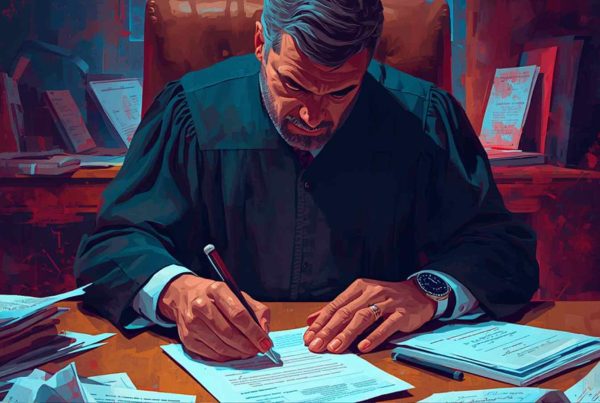
There may exist, in some of the corporate corridors, a species of delusion that the mere act of winding up a company will somehow cause inconvenient financial realities to evaporate like morning mist. Chief among such potentially cherished misconceptions could be the notion that liquidation may serve as a kind of fiscal eraser, capable of rubbing out those arguably awkward director’s loan accounts that may have grown rather too corpulent for comfort.
A spade must be called a spade. This is completely wrong.
A director who has spent years treating the company as their personal piggy bank, withdrawing funds insouciantly, may be under the impression that calling in the liquidators will draw a merciful veil over past indiscretions. Perhaps it might even be imagined that the Registrar of Companies maintains a furnace into which embarrassing balance sheets are fed.
The reality proves considerably less accommodating to any such wishful thinking.
When a company enters liquidation, its final accounts become not a rough draft to be tidily edited, but a published work of fiscal non-fiction, called the Statement of Affairs, with accuracy being paramount. That overdrawn director’s loan account, swollen perhaps by years of “temporary” withdrawals and “short-term” advances, does not simply disappear because the company can no longer trade. Indeed, quite the reverse occurs: it crystallises into a debt as real and immediate as a bailiff’s knock.
The liquidator, who could be considered akin to a financial archaeologist, approaches the company’s books with the task not to provide creative accounting solutions for directors, but to maximise recoveries for creditors.
Directors who have consumed company funds while creditors waited for payment may now find that body corporate on their personal creditor list.
The law, in its majestic impartiality, makes no distinction between a director who has borrowed from his company and any other debtor. The overdrawn loan account represents a liability that comfortably survives the company’s demise. It can perhaps risk haunting the director’s personal finances long after the corporate entity has taken its last trading breath.
There appears something a touch ironic, of a director having treated their company as a personal cash machine for years, the very vehicle they used to extract wealth, now in some cases becoming the instrument contributing to some potential financial inconvenience.
This is not an oversight in the system; it is the system working precisely as intended. Company and insolvency law has never been designed as a sanctuary for the financially incontinent, nor does it provide absolution for those who confuse directorial privilege with personal entitlement. The limited liability that may protect directors from the company’s debts extends no such courtesy to debts owed to the company.
A company’s demise does not erase its claims. The overdrawn director’s loan account remains as stubbornly present in the final balance sheet as a wine stain on a wedding dress, impossible to ignore and sometimes expensive to address.
For the director who finds himself in this predicament, the options are refreshingly straightforward: pay what you owe, or prepare to negotiate in good faith with the liquidator who seeks to collect. There are no erasers large enough to remove years of fiscal indiscipline from the permanent record.
The knowledge that overdrawn loan accounts survive liquidation serves as a useful reminder that directorial privilege comes with directorial responsibility, a lesson that, judging perhaps by the frequency with which it must be taught, remains as relevant today as it was when the first limited company discovered that limited liability has its limits.

For a free no obligation chat about any of the matters detailed above, please do get in touch for help. An expert will call you back or if you prefer exchange emails.
We can explore your situation and consider the best way to help you and your business needs. You can call us 020 3925 3613 or fill in the form below and will get back to you quickly. We Know Insolvency Inside Out.


What Next?
Expert Advice Is Just A Click Away
If you have any questions then contact us as soon as possible for advice. Oliver Elliot offers a fresh approach to insolvency and the liquidation of a company by offering specialist advice and services across a wide range of insolvency procedures.
Our expertise is at your fingertips.
Disclaimer
This page is not legal advice and is not to be relied upon as such. This article is provided for information purposes only. You should take independent advice on the facts of your case. No liability is accepted for reliance upon this post.
Recent Posts / View All Posts